What Is the Best LED Panel from China?

Choosing the best Led Panel from China requires more than comparing prices, pixel pitch, or cabinet photos. Buyers must examine brightness, refresh rate, color consistency, thermal control, power efficiency, and after-sales support. A panel may look impressive in a showroom, yet perform poorly under sunlight or continuous operation. That gap matters.

Industry data shows why this market deserves careful evaluation. TrendForce’s LEDinside reports identify China as a major production center for fine-pitch LED displays and direct-view LED solutions. MarketsandMarkets also projects continued growth in the global LED display market, driven by advertising, command centers, retail, sports, and virtual production. These reports indicate strong manufacturing capability, but they do not prove that every Chinese supplier offers the same quality. Certification, component traceability, and long-term testing still matter.

The future is bright.

LED industry pioneer Dr. Roland Haitz once said, “The future of LEDs is very bright.” His statement remains relevant, but brightness alone cannot define the best Led Panel. A reliable product should maintain stable colors across modules, protect internal components from dust and heat, and provide accessible spare parts. Ask for real operating footage. Request test reports. Inspect the seams between cabinets.

There is no universal winner. Indoor fine-pitch panels suit close viewing, while outdoor models need stronger weather protection and higher brightness. Some buyers focus too heavily on the initial quotation. That is a mistake, though not an unusual one. The better decision balances image performance, total ownership cost, installation conditions, and the supplier’s evidence of consistent delivery.
What Is the Best LED Panel from China?

What Defines a High-Quality LED Panel from China?

A high-quality LED panel from China starts with consistent performance, not a bright showroom sample. In practical inspections, check brightness, color accuracy, viewing angle, and heat control. A reliable panel should maintain stable color across its surface. Dark corners or visible patches suggest uneven LEDs or weak calibration. Aluminum housing also matters because it helps release heat during long operation.

Tips: Request a sample from the same production batch. Test it for several hours. Measure surface temperature with a simple infrared thermometer. Ask for photometric data, electrical specifications, and reports for recognized safety and electromagnetic compatibility testing. Confirm that these documents match the exact model, not a similar product. Check the power supply, connectors, sealing, and mounting points. Small details often reveal manufacturing discipline.

Good suppliers explain their inspection process clearly. They should describe aging tests, brightness checks, and quality records without making vague promises. A written warranty is useful, but replacement terms must be specific. Ask how defective modules are identified and handled. I have seen attractive samples fail after extended use, so appearance alone is a poor judge. Cost can influence materials, yet the cheapest option may create higher maintenance expenses. Even careful buyers can miss one weak component. A final sample test before shipment remains worthwhile.

What Defines a High-Quality LED Panel from China?

This benchmark model evaluates the main technical factors used when selecting a professional LED panel. The weighting reflects common buyer priorities: reliable image performance, consistent manufacturing quality, outdoor protection, and long-term serviceability. The values are evaluation weights rather than company or brand results.

Which Types of Chinese LED Panels Suit Different Applications?

Choosing the best LED panel from China depends less on origin and more on the application. The wrong panel can waste power and weaken visual quality.

For offices, control rooms, and meeting spaces, indoor fine-pitch panels usually provide sharp text and smooth skin tones. A 1.2 to 2.5 millimeter pixel pitch suits close viewing distances. COB panels can reduce visible gaps and improve surface protection, but they may cost more and require careful maintenance. I have found that brightness alone is misleading. A screen that looks impressive in a showroom may feel harsh in a dim office.

Outdoor advertising and stadium displays need high brightness, strong ventilation, and suitable IP protection. Rental panels should be lightweight, quick to assemble, and resistant to repeated handling. Transparent panels fit shop windows and glass facades where daylight must remain visible. Flexible panels work around columns or curved structures, although installation mistakes can create uneven seams. Poster-style panels suit temporary retail campaigns and small indoor promotions.

Check refresh rate when cameras will record the screen. Check calibration consistency across replacement modules. Ask for test reports, power data, spare-part availability, and clear warranty terms. Independent inspection is worthwhile for large projects. Do not trust one sample alone. Viewing distance, heat, dust, and service access can change the decision completely. My own preference has changed after seeing beautiful displays fail because technicians could not reach the rear cabinet.

What Is the Best LED Panel from China? - Which Types of Chinese LED Panels Suit Different Applications?

A practical comparison of common LED panel technologies and their typical application requirements.

LED Panel Type Typical Pixel Pitch Typical Brightness Common Protection Key Strengths Best-Fit Applications Main Considerations
SMD Indoor Fine-Pitch Panel P0.9–P3.9 600–1,500 nits Usually IP20; optional front protection High resolution, wide viewing angle, good color performance, and smooth video reproduction Meeting rooms, control rooms, retail displays, museums, studios, and corporate lobbies Requires controlled indoor conditions; smaller pixel pitches generally increase cost and installation precision
COB Fine-Pitch Panel P0.7–P1.5 600–1,200 nits Often IP30 or higher on the display surface High pixel density, strong surface durability, reduced pixel exposure, and suitable for close viewing Premium boardrooms, command centers, broadcast environments, financial displays, and high-end digital signage Higher initial cost; repairs and module replacement may require specialized service procedures
GOB-Protected Indoor Panel P1.2–P3.9 800–1,500 nits Protective glue layer; exact IP rating depends on construction Improved resistance to dust, accidental contact, moisture, and minor impact Public interiors, transportation halls, rental events, retail areas, and high-traffic venues Protection quality depends on the coating process; damaged surfaces can be more difficult to repair
Outdoor SMD Panel P3.9–P10 4,500–8,000 nits Typically IP65 front and IP54 rear or equivalent High daylight visibility, efficient viewing at medium and long distances, and broad product availability Building facades, roadside advertising, stadiums, outdoor stages, plazas, and commercial signs Needs suitable drainage, ventilation, grounding, weather sealing, and a structure designed for wind load
Outdoor DIP Panel P6–P20 5,000–10,000 nits Commonly IP65 front and IP54 rear or equivalent Strong daylight performance, robust outdoor construction, and good long-distance readability Large roadside billboards, airport approaches, highways, and very large outdoor screens Lower resolution and narrower viewing angle than many SMD alternatives; not ideal for close viewing
Rental / Touring Panel P2.6–P5.9 3,000–5,500 nits IP31–IP65 depending on indoor or outdoor design Fast assembly, lightweight cabinets, front or rear service options, and corner protection Concerts, exhibitions, conferences, wedding stages, television events, and temporary installations Frequent transport requires strong locks, spare modules, protective cases, and disciplined handling
Transparent LED Panel P3.9–P10.4 3,000–6,000 nits Limited weather protection unless specially enclosed Allows light and views to pass through, with a lightweight visual design and reduced structural blockage Glass façades, shopping malls, airports, atriums, stage backdrops, and architectural installations Lower contrast in bright surroundings and less detail than solid LED panels; requires careful content design
Flexible / Curved LED Panel P1.8–P6.25 800–4,500 nits Usually designed for indoor use; outdoor protection is project-specific Supports cylinders, waves, columns, creative curves, and irregular display surfaces Creative retail displays, museums, themed venues, exhibitions, entertainment spaces, and stage design Requires accurate mounting geometry and careful handling; heat dissipation and maintenance access must be planned
Selection note: Pixel pitch, brightness, refresh rate, viewing distance, operating environment, cabinet size, service access, power consumption, and local installation standards should be confirmed for each project. The specifications above are typical industry ranges and may vary by configuration.

How to Evaluate Chinese LED Panel Manufacturers

What Is the Best LED Panel from China?

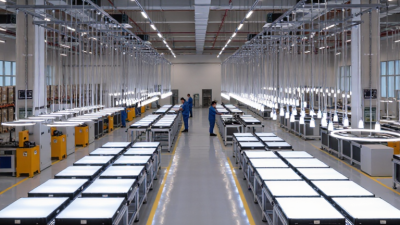
The best LED panel depends on your project, not a factory’s sales pitch. Evaluate Chinese LED panel manufacturers through evidence, testing, and communication. Ask for a factory video, production photos, and recent project references. A reliable manufacturer should explain its LED type, cabinet structure, brightness range, and expected lifespan clearly. Vague answers deserve caution.

Request a sample panel before placing a large order. Inspect its color consistency, viewing angle, pixel protection, and cabinet alignment. Run it for several hours and check heat, noise, and brightness stability. Ask for test reports, quality-control records, and applicable certifications. Confirm whether the reported data comes from independent testing or internal inspection. That difference matters. Also examine spare-part access, warranty terms, packaging, and technical support. Many buyers focus on price and regret ignoring after-sales response time.

Tips: Compare at least three manufacturers using the same checklist. Measure power consumption at normal brightness, not only at maximum output. Visit the factory when possible, but remember that a polished tour proves little by itself. Ask workers how defects are recorded and corrected. A sample can perform well while mass production varies, so include inspection requirements in the contract. This step is often skipped. I would also leave room for doubt: test outdoor panels in real weather, because laboratory results cannot reveal every installation problem.

What Features and Specifications Should Buyers Compare?

Choosing the best LED panel from China requires more than comparing wattage and price. Start with delivered efficacy, measured in lumens per watt. The U.S. Department of Energy’s 2023 Solid-State Lighting R&D Opportunities report records laboratory LED efficacy above 200 lm/W, but complete fixtures usually perform lower. Ask for independent test results, not only a catalogue claim. A 40-watt panel producing 4,800 lumens delivers 120 lm/W. That figure is easier to compare.

Color quality deserves equal attention. Check CRI, R9, and TM-30 data, especially for retail, education, and healthcare spaces. CRI above 80 suits general offices, while higher R9 values improve red tones on skin and food. Confirm the color temperature, such as 3000K or 4000K, and its tolerance range. Flicker matters too. The IEEE 1789 guidance and international lighting research encourage buyers to review modulation depth and operating frequency, rather than accepting “flicker-free” wording.

Look closely at thermal design. An aluminum backplate, stable driver, and documented lifetime test are practical evidence. Request L70 life, ambient-temperature limits, power factor, surge protection, and IP rating. The IEA’s 2024 Energy Efficiency Progress Report shows lighting remains a major electricity-use area, so small efficiency differences accumulate across large installations. Certifications for the destination market should be verifiable. Warranty terms need careful reading. I have seen impressive samples fail after poor ventilation, so a perfect datasheet is not enough. The installation environment can expose weak assumptions.

How to Select the Best Chinese LED Panel for Your Project

Choosing the best Chinese LED panel starts with your project, not a product photo. Define the screen’s size, viewing distance, brightness, resolution, and installation location. An indoor conference room needs different performance from an outdoor advertising wall. I have seen buyers overpay for brightness they never use.

Ask for a complete technical datasheet. Check pixel pitch, refresh rate, grayscale, color consistency, power consumption, and cabinet weight. For outdoor projects, verify weather protection, operating temperature, and corrosion resistance. Request a sample panel before placing a large order. Look closely at black levels, seams, viewing angles, and fan noise. Small defects become expensive across a large display.

Supplier evaluation matters just as much. Review factory photos, production records, inspection procedures, and export experience. A responsible supplier should provide test reports, installation guidance, spare-parts planning, and clear warranty terms. Confirm whether the quoted price includes control systems, cables, shipping, and replacement modules. Hidden costs are common. I once focused too heavily on unit price and underestimated installation labor. That mistake changed my purchasing checklist. Ask how modules are calibrated and tested before shipment. Independent inspection can also protect a complex project. Certifications should match your destination market, but documents alone do not prove quality. Speak with technical staff, not only sales representatives, and record every specification in the contract.