What Are the Top LED Panel Types for 2026?
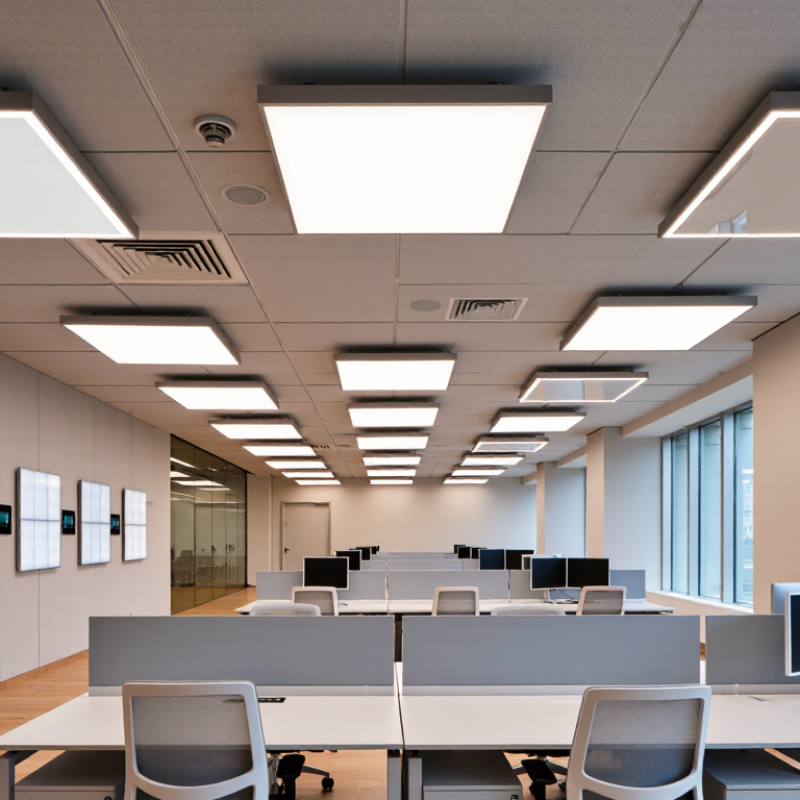
As buildings demand lower energy use and more adaptable interiors, the Led Panel has become more than a flat ceiling fixture. It shapes brightness, visual comfort, and the character of a room. The U.S. Department of Energy’s solid-state lighting research reports that LED technology can deliver substantial efficiency gains over conventional lighting. Its widely cited consumer guidance says LED bulbs use at least 75% less energy than incandescent bulbs. Yet efficiency alone does not choose the right panel.
A useful expert perspective comes from lighting designer James R. Benya, whose published work emphasizes matching lighting design to the task and the people using the space. Put simply: fit the light to the room. This is a paraphrase, not a verbatim quotation. For a low-ceiling office, a slim edge-lit panel may distribute light evenly; a backlit model can offer a different balance of brightness and cost. In schools, clinics, and retail spaces, glare control, color consistency, dimming, and maintenance access matter just as much as wattage.
This guide compares the leading panel types expected to matter in 2026, including edge-lit, backlit, tunable-white, and smart-connected options. DOE research also makes clear that product performance depends on more than the LED chip: drivers, optics, thermal design, and controls all affect results. Small details count. A bright panel can still feel harsh above a polished desk. Specifications help, but they do not replace a real-room assessment. And one caveat deserves attention: product labels can make unlike panels look comparable. We will examine what the numbers reveal—and what they leave out.
LED Panel Basics and the Main Types Available in 2026
What Are the Top LED Panel Types for 2026?
LED Panel Basics and the Main Types Available in 2026
An LED panel forms an image with many tiny light-emitting diodes. In direct-view displays, each pixel produces light itself, unlike an LCD panel, which uses a backlight. Pixel pitch measures the distance between pixel centers. A smaller pitch usually gives a sharper image at close viewing distances, but it can cost more. Details matter.
Common options include indoor panels, outdoor panels, fine-pitch displays, transparent panels, and flexible panels. Indoor models suit meeting rooms and retail spaces, where viewers may stand nearby. Outdoor models typically use protective cabinets and brighter output to remain visible in daylight.
Fine-pitch panels work well for close-up viewing, though installation and calibration need care. Transparent panels let light pass through gaps, while flexible modules can follow curved surfaces. Their appearance and performance depend on the specific design.
Tips: Check viewing distance, ambient light, and mounting space before choosing. Ask to see a sample at the distance people will actually watch from. A bright showroom can make panels look clearer than they will in a dim room. And do not overlook maintenance access.
How LED Panel Technologies Differ in Design and Performance
LED panels differ most in how they create light. OLED pixels emit light individually, giving dark scenes precise blacks and thin screens. Mini-LED panels remain LCDs, but use many small backlights and local dimming zones. They can deliver strong brightness, though bright objects may create halos against dark backgrounds. Direct-view LED uses separate light-emitting diodes as the pixels, making it suited to large-format installations viewed from a distance. The viewing distance matters.
VESA’s DisplayHDR specification lists brightness tiers including 400, 600, 1,000, and 1,400 cd/m². Those figures help compare peak output, but they do not describe sustained brightness or halo control. Not the whole picture. For longevity, the U.S. Department of Energy’s 2022 Solid-State Lighting R&D Opportunities report discusses lumen maintenance as a key performance measure; buyers should check the test conditions behind any lifetime claim. In a real showroom, compare a dark scene, bright subtitles, and a face at several viewing angles. A specification sheet may look decisive. It can still miss the viewing conditions that shape everyday performance.
Top LED Panel Types for Offices, Homes, Studios, and Public Spaces
What Are the Top LED Panel Types for 2026?
For offices, fine-pitch direct-view LED panels create sharp dashboards, presentations, and video walls. A pixel pitch below 2.5 millimeters usually suits close viewing, but room size matters more than a fixed number. In a bright meeting room, higher brightness improves readability. It can also cause eye fatigue. A matte surface, automatic dimming, and careful calibration often matter more than maximum output.
Homes need a different balance. Slim LED panels with efficient SMD designs can support media rooms, gaming spaces, or large digital artwork. Smaller rooms benefit from softer brightness and lower fan noise. Flexible LED panels can follow curved walls, although installation is less forgiving. Uneven surfaces may reveal shadows or visible seams. I would test one section before ordering a complete wall. That small step prevents expensive rework.
Studios often require accurate color, stable refresh rates, and low flicker under cameras. COB panels offer a smooth surface and strong protection against dust and touch. Public spaces may favor rugged outdoor-rated panels, transparent displays, or modular cabinets for easier maintenance. Transparent panels can preserve storefront visibility, but daylight may reduce contrast. Service access is also crucial. A panel that looks impressive can become a maintenance problem when technicians cannot reach its power units safely. Viewing distance, ventilation, control compatibility, and energy use should be checked together, not treated as separate details.
Top LED Panel Types for 2026: Planning Light Levels by Space
Typical illuminance benchmarks can help guide panel selection: edge-lit panels suit low-profile installations, backlit panels provide broad general lighting, and tunable-white or high-CRI panels can support studios and adaptable spaces.
Illustrative planning benchmarks in lux, not universal requirements. Appropriate levels vary with the task, room design, applicable standards, and project needs.
Key Factors for Comparing Brightness, Efficiency, Lifespan, and Cost
For 2026, compare edge-lit and backlit LED panels by delivered lumens, not appearance alone. Edge-lit panels are slim and easy to fit into shallow ceilings. Their light travels through a diffuser, so check for bright edges or uneven corners. Backlit panels place LEDs behind the diffuser and can suit spaces needing stronger, more uniform output.
More light is not always better. Check glare and the task area.
Efficiency means lumens per watt, measured at the fixture.
The IEA’s Energy Efficiency 2023 report estimates lighting uses about 15% of global electricity, making small efficiency gains meaningful at building scale. For lifespan, look for L70 ratings supported by LM-80 testing and TM-21 projections; a projected life is not the same as a warranty.
Tunable-white panels add control, but controls and commissioning may raise initial cost.
Compare total ownership cost: purchase, energy, maintenance, and replacement.
I still see specifications compared unevenly; that makes a neat spreadsheet look more certain than it is. Check the test conditions, dimming level, and color temperature before choosing.
Choosing the Right LED Panel Type for Specific Lighting Needs
Choosing an LED panel starts with the room, not the product label. A bright panel may still create glare over desks or reflective floors. For offices, backlit panels usually provide even illumination with fewer visible hotspots. Edge-lit panels suit shallow ceilings and narrow spaces, but their light distribution needs careful checking. I always compare UGR, lumen output, beam spread, and installation depth before specifying a fixture.
Different tasks require different panel types. Classrooms and workspaces benefit from neutral white light, often around 3500K to 4000K, with accurate color rendering. Retail displays may need higher CRI to reveal fabric, food, or painted surfaces honestly. Tunable white panels help rooms shift from cooler morning light to warmer evening light. They cost more, and the controls can confuse users. Keep it simple.
Hospitality areas may use dimmable or color-changing panels for atmosphere, although decorative lighting should not replace useful task light. For video rooms, low-flicker performance matters more than dramatic brightness. Check driver quality, compatibility with dimmers, emergency systems, and local electrical requirements. Measure twice. Install once.
A practical test remains valuable. Place one sample above the actual work area and inspect shadows, glare, and skin tones at different times. I have seen impressive specifications fail in rooms with dark ceilings or uneven spacing. Energy savings also depend on controls, cleaning access, and operating hours. The best LED panel type is the one that performs comfortably after installation, not merely the one with the highest lumen figure.
Related Posts
-
Mastering Outdoor Light Fixtures in Your Landscape Design with Expert Tips and Tricks
-
The Comprehensive Handbook for Sourcing Quality Wall Lights Globally
-
2026 Best LED Shop Lights for Your Business Needs?
-
Top 10 Led Shop Lights for Your Best Lighting Solution?
-
How to Choose the Best Led Power Supply for Your Business Needs
-
Advantageous Features of Embracing Led Bulbs for Sustainable Lighting Solutions