
Why Is My Main Door Lock Not Working?
A Main Door Lock that suddenly sticks can turn an ordinary morning into a security concern. The key may resist, the handle may sag, or the latch may stop aligning with the strike plate. These symptoms can come from worn parts, loose hardware, a swollen door, or a damaged key. Sometimes the cause is simple. Sometimes it is not.
The FBI’s Crime in the United States 2019 report recorded 1,117,696 burglary offenses; 55.7% involved forcible entry. That figure does not show how many incidents involved faulty locks, so it should not be treated as proof that a malfunction caused a break-in. Still, a lock that will not latch deserves timely attention. Start by checking whether the door closes evenly and whether the key turns smoothly. Avoid forcing it; extra pressure can damage the cylinder or snap the key. If the problem continues, a qualified locksmith can inspect the lock, alignment, and surrounding hardware. This guide explains common causes, safe checks, and signs that professional repair or replacement may be needed. A small detail matters: the door’s fit can change with temperature and humidity, even when the lock itself is fine. I have to admit, diagnosing it from symptoms alone is imperfect; careful inspection is what separates a quick adjustment from a security risk.
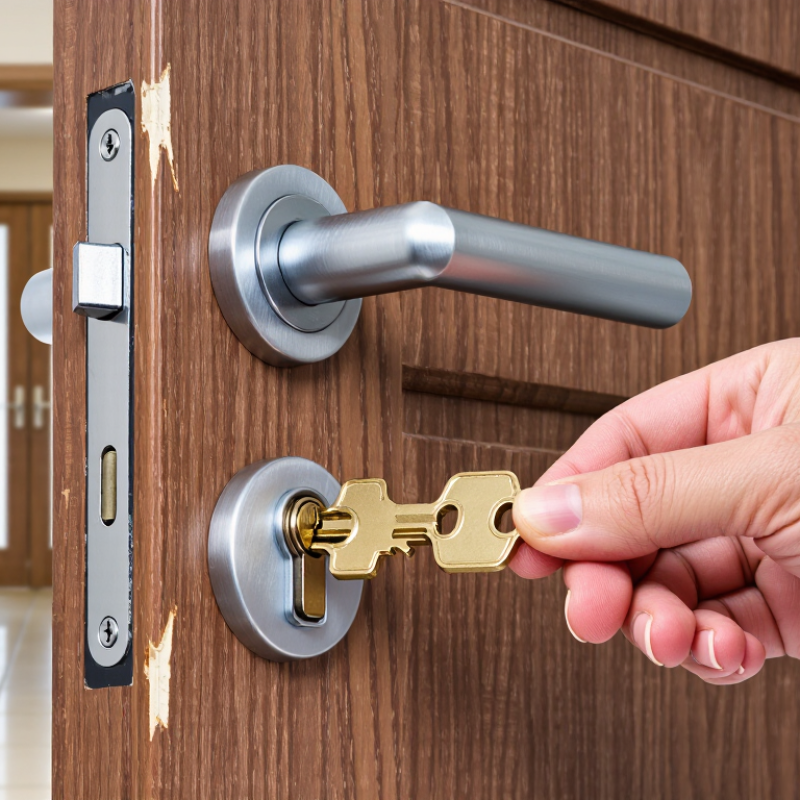
How a Main Door Lock Works
A main door lock transfers a small movement into a secure bolt. In many cylinder locks, the key lifts pins inside the cylinder to the correct heights. The plug can then turn. A tailpiece connected behind it moves the deadbolt mechanism, extending or retracting the bolt. With a latch lock, the handle usually pulls back a spring-loaded latch instead. Different parts, similar job.
That’s the basic sequence. If the key turns but the door stays shut, the tailpiece or bolt may not be moving freely. If the key feels stiff, dirt, worn pins, or pressure from a misaligned door can be involved. Notice whether the bolt scrapes the strike plate; even a small shift in the door frame can matter. A lock is not always the culprit. I’d avoid forcing a key, since a bent or snapped key can make the repair harder.
Durability testing offers another useful clue, but it does not predict a lock’s exact lifespan. The Builders Hardware Manufacturers Association’s ANSI/BHMA A156.2 standard assigns cylindrical locks durability grades, with Grade 1 tested for 800,000 cycles, Grade 2 for 400,000, and Grade 3 for 200,000. These are test cycles, not a promise of years in service. Dust, frequent use, and door alignment still affect how smoothly a real lock works.

Common Symptoms and Causes of Lock Failure
A main-door lock often gives warning signs before it stops working. The key may stick, turn roughly, or refuse to come out. The handle may sag, and the latch may scrape the strike plate instead of clicking into place. These symptoms can come from worn pins, a bent key, loose screws, or a door that has shifted with seasonal humidity. Dirt inside the cylinder can also make turning feel gritty. A lock that turns smoothly with the door open but binds when closed may point to misalignment, not a failed cylinder. Small clues matter.
The ANSI/BHMA A156.2 standard grades cylindrical locks through endurance testing. Its Grade 1 benchmark includes one million operating cycles; Grade 2 includes 400,000, and Grade 3 includes 200,000. These are controlled test figures, not a promise of service life in every home. Dust, repeated slamming, and poor alignment can all affect performance. Sometimes the problem is the door, not the lock.
Tips: Try the key with the door open, then closed, and compare how it turns. Check for loose handle screws and visible rubbing around the latch. Avoid forcing a stiff key; it can bend or break. If the lock still binds after basic checks, a qualified locksmith can inspect the cylinder and door alignment. A quick adjustment may help, though the cause is not always obvious at first glance.
Why Is My Main Door Lock Not Working?
Common symptoms and causes of lock failure
This qualitative 1–5 scale is a troubleshooting guide, not measured failure-rate data. A key that sticks may point to a worn key or cylinder; a bolt that binds when the door is shut may indicate door or strike-plate misalignment. For electronic locks, check the batteries first.
Step-by-Step Checks for a Lock That Will Not Work
Why Is My Main Door Lock Not Working?
Start with the key. Check for a bent edge, cracks, or dirt between the cuts, then try a spare if you have one. Do not force it. If the key turns while the door is open but sticks when it is closed, the door may be pressing against the bolt. That small difference is useful.
Close the door gently and watch where the latch meets the strike plate. A scrape mark, tight gap, or loose hinge screw can point to misalignment. Tighten loose screws carefully, then test the handle and deadbolt again. Keep the door open during a few tests, so you do not accidentally lock yourself out. This check can feel repetitive, but it helps separate a door problem from a lock problem.
For an electronic lock, replace weak batteries and check that the battery contacts look clean and dry. For a stiff mechanical lock, use only a lubricant made for locks, following its instructions; household oil can attract grime. If the key is trapped, the bolt will not move, or gentle checks make no difference, stop before parts bend or break. A qualified locksmith can inspect the cylinder and door alignment. The cause is not always obvious.
When to Repair or Replace the Lock
A main door lock that sticks does not always need replacing. Start by noticing when the problem occurs. Does the key catch only when the door is shut, or does the lock feel rough even with the door open? If it works open but jams in the frame, the door may have shifted, or the strike plate may be misaligned. A locksmith can check this before you pay for a new lock. I once assumed a stiff key meant the cylinder was failing; the door pressure was part of the problem. Easy mistake.
Repair is often reasonable when the lock is intact and the fault is limited to a loose handle, worn latch, or alignment issue. Replace it if the key turns without engaging, internal parts are badly worn, or the lock has repeated failures despite proper adjustment. Visible corrosion, a cracked housing, or damage after a break-in also warrants prompt professional assessment. Don’t force the key; it can snap and make the repair harder. A qualified locksmith can inspect the cylinder, latch, and door fit, then explain which parts can be repaired. Ask for the cause, not just the price. If the lock still feels unreliable after service, replacement may be the safer practical choice.
Why Is My Main Door Lock Not Working? — When to Repair or Replace the Lock
| Symptom | Possible cause | When repair may be enough | When replacement is preferable | Recommended next step |
|---|---|---|---|---|
| The key is stiff or difficult to turn | Dirt in the keyway, a worn key, or a misaligned door or strike plate | The lock body is intact and the problem improves after checking door alignment or using a lock-compatible dry lubricant. | The keyway is damaged, the key repeatedly sticks, or the lock remains unreliable after basic checks. | Try a spare key and check whether the door closes without force. Avoid forcing the key, which can break it inside the lock. |
| The key turns, but the door will not unlock | A disconnected or worn internal mechanism, or pressure on the latch from a misaligned door | The latch works when the door is open, suggesting that adjustment to the strike plate or hinges may resolve the issue. | The key turns without moving the bolt, or the internal mechanism is broken or badly worn. | Test the lock with the door open. If it works only when open, inspect alignment; if it does not, arrange a lock repair or replacement. |
| The deadbolt or latch does not extend fully | Misalignment, a loose mounting screw, debris, or a damaged bolt | The bolt is undamaged and the issue is caused by loose hardware or a strike plate that needs adjustment. | The bolt is bent, cracked, or fails to move consistently because internal parts are damaged. | Check for loose screws and visible obstructions. Do not rely on a lock that cannot fully secure the door. |
| The key is broken in the lock | A worn or damaged key, excessive turning force, or a sticking lock | The lock still operates smoothly after the broken piece is safely removed and no damage is found. | The keyway or mechanism is damaged, or the lock continues to bind after removal. | Do not push the fragment farther in or use household glue. Contact a qualified locksmith if it cannot be removed without damage. |
| The lock works intermittently | Worn internal parts, a loose cylinder, or inconsistent door alignment | A loose fitting or alignment problem can be corrected and the lock then operates reliably through repeated tests. | The fault returns, the cylinder moves excessively, or the lock cannot be trusted to secure the door every time. | Arrange an inspection soon, especially if the door is an exterior entrance. Keep another secure entry available where possible. |
| The lock or door has visible damage | Impact, attempted forced entry, corrosion, or long-term wear | Damage is limited to replaceable hardware and the lock and door remain structurally sound. | The lock body, cylinder, bolt, or surrounding door is cracked, bent, or compromised. | Secure the entrance with a working lock and have the damaged components assessed promptly. |
| Keys are lost or may have been copied without permission | Uncertainty about who can access the existing key | Rekeying may be suitable if the lock is in good condition and compatible with the rekeying process. | The lock is damaged, incompatible with rekeying, or a different level of security is needed. | Consider rekeying or replacing the cylinder. Choose replacement if the existing lock cannot be made secure. |
General guidance: Repair is often suitable when the lock is structurally sound and the fault is limited to alignment, loose hardware, or a serviceable part. Replacement is generally preferable when the lock is damaged, badly worn, repeatedly unreliable, or cannot provide dependable security. If the door cannot be secured, contact a qualified locksmith promptly.
How to Prevent Future Door Lock Problems
A dependable lock starts with a door that sits correctly in its frame. Every few months, close the door slowly and watch whether the latch meets the strike plate cleanly. If you need to lift or push the door, check for loose hinge screws or seasonal swelling before blaming the lock. Small alignment problems can put steady pressure on the latch and make the key harder to turn. Don’t force it.
Keep the keyway free of grit, paint, and moisture. Use only a lubricant recommended in the lock’s care instructions; some household oils can collect dust and make sticking worse. Wipe keys occasionally, and replace bent or badly worn ones. After rain or freezing weather, check that the key turns smoothly and the door opens without scraping. A quick test with the door open can help distinguish a lock issue from a door-alignment issue.
Pay attention to gradual changes. A key that catches once may be a warning, not a reason to wait until it stops working. Avoid hanging heavy items from the handle, and tighten loose hardware with the right screwdriver, without overtightening. If the lock keeps binding, feels unusually loose, or shows visible damage, have a qualified locksmith inspect it. I’d still recheck the door fit afterward; fixing one part doesn’t always fix the cause.
