Why Are Crystal Singing Bowls So Popular?
Crystal singing bowls have moved from meditation studios into living rooms, yoga spaces, and wellness shops. Their appeal begins with sound: a gentle strike or circling mallet can produce a clear, sustained tone that seems to linger in the room. The bowl may shimmer softly. A low note can feel steady; a higher one, bright and delicate. For many listeners, that contrast offers a simple focus during meditation or quiet reflection. No special training is required.
Sound-healing author and practitioner Jonathan Goldman has said, “Sound is the medicine of the future.” The line captures the optimism surrounding sound practices, but it should not be treated as proof that a Crystal Singing Bowl can cure illness. Research on singing bowls is still limited, and relaxation is not the same as medical treatment. Popularity also has practical roots: bowls are portable, visually striking, and easy to use in a short routine at home. Some people enjoy the ritual as much as the tone. Others find a bowl too loud, too piercing, or simply not for them. That matters. A thoughtful guide should explore how bowl size, material, playing technique, and listening environment shape the experience—while leaving room for personal preference and honest uncertainty.
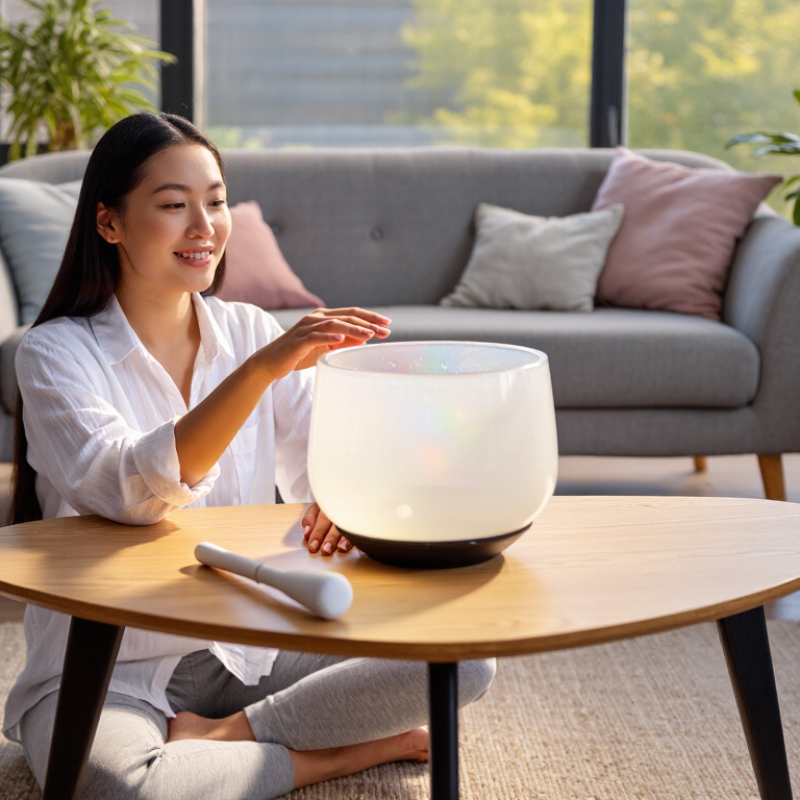
What Crystal Singing Bowls Are
Crystal singing bowls are typically made by heating finely ground quartz or silica and shaping it into a smooth, hard vessel. They are not usually carved from a single natural crystal. The finished bowl may look milky, clear, or softly colored. Its curved sides and open rim help it vibrate when played. The details vary.
A player can tap the bowl gently or move a padded mallet around its rim. Rubbing creates friction, setting the bowl vibrating and producing a sustained tone. The sound changes with the bowl’s size, wall thickness, shape, and material. Larger bowls often sound lower, though design also matters. A room’s hard walls can make the tone seem brighter or last longer. Listen closely.
People use these bowls in meditation, yoga, and sound-focused relaxation sessions. Some listeners describe feeling calm; others find the sound intense or distracting. That response is personal, and claims of specific health outcomes should be treated cautiously. A bowl can support a quiet practice, but it is not a medical treatment. Honestly, the word “crystal” can suggest more mystery than the object needs. It is a resonant vessel, and its sound depends on both its construction and how it is played.
How Crystal Singing Bowls Produce Sound
Why Are Crystal Singing Bowls So Popular?
How Crystal Singing Bowls Produce Sound
A crystal singing bowl produces sound when its sides vibrate. Many are made from high-purity quartz heated and shaped into a smooth, rigid vessel. Tap the bowl gently, and the impact sets its walls moving. Run a padded mallet around the rim, and friction keeps those vibrations going. The bowl’s shape and thickness influence its pitch and tone.
Listen closely. A clear note may swell, waver, or carry faint higher tones. These details depend on the bowl, the pressure and speed of the mallet, and even the room. Hard surfaces can make the sound seem brighter, while curtains and carpets absorb some reflections. Hold the mallet too lightly, and the note may falter; press too hard, and it can scrape. Small adjustments matter.
Descriptions of the sound sometimes make it seem effortless. The technique can take practice, and not every bowl responds the same way. That’s worth remembering. A bowl’s steady, resonant tone comes from physical vibration, not a mysterious force. Its lasting sound can feel immersive, but what each listener notices is personal.
How They Are Used in Wellness and Meditation
In wellness and meditation sessions, crystal singing bowls are used to create a steady soundscape, not to diagnose or treat illness. A facilitator may strike the rim gently, then let each tone fade before playing again. Participants often sit or lie down, noticing the sound, their breathing, or the quiet between notes. The appeal is sensory. A clear, lingering tone can give a wandering mind one simple point of attention. Some people find it soothing; others find the volume distracting. That difference matters.
The wider wellness economy helps explain the setting, but not the bowls’ specific popularity. The Global Wellness Institute’s 2024 Global Wellness Economy Monitor estimated the sector at $6.3 trillion in 2023 and projected growth to $9 trillion by 2028. This is broad market context, not evidence that singing bowls improve health. Evidence for bowl-specific effects remains limited, so responsible practitioners avoid promising cures. They ask about sound sensitivity, keep the volume comfortable, and offer silence as an option. Small details count: a bowl placed nearby may feel intense, while one across the room can be easier to follow. And sometimes the session feels awkward. That is worth saying plainly.
Why Are Crystal Singing Bowls So Popular?
How they are used in wellness and meditation
Singing bowls produce sustained tones that are often used as a focus for meditation, relaxation, or sound-based wellness sessions. This chart shows standard equal-tempered reference pitches from C4 to C5—not measurements of particular bowls. Individual bowls may be tuned to different pitches.
Why Their Sound Appeals to Many Listeners
Crystal singing bowls appeal to listeners partly because their sound feels simple but immersive. A single strike creates a bright tone that lingers, with subtle overtones shifting as it fades. There is no melody to follow and no beat to keep. Listeners can focus on the ringing sound, or let it sit in the background. That open-ended quality suits quiet rooms, guided relaxation, and personal listening. The response is subjective, though; a high, sustained note can feel soothing to one person and sharp to another.
The broader interest in sound and wellbeing has context, but it does not prove that bowls have special effects. The Global Wellness Institute estimated the global wellness economy at $6.3 trillion in 2023. IFPI’s 2023 Engaging with Music report found that people across 26 markets listened to music for an average of 20.7 hours weekly. Those figures show how much space people make for wellbeing and listening, not why crystal bowls attract them specifically. That distinction matters. Their appeal may come from the mix of clear resonance, slow changes, and room for personal interpretation. Sometimes, the sound is simply unusual.
Why Are Crystal Singing Bowls So Popular? — Why Their Sound Appeals to Many Listeners
| Sound or Listening Feature | What Listeners May Notice | Why It Can Appeal | Important Context |
| Sustained resonance | A tone can continue fading after the bowl is struck or rubbed. | The lingering sound gives listeners time to follow its rise and decay without a fast sequence of notes. | How long a tone lasts depends on the bowl, how it is played, and the room. |
| Clear, focused tone | Many bowls produce a prominent pitch with additional tonal components. | A recognizable tonal center can make the sound feel simple to attend to. | The pitch and tonal character vary with the bowl and playing technique. |
| Overtones and beating | Some bowls have audible upper partials; nearby frequencies can create a wavering quality. | These changing details can make a sustained note feel textured rather than completely static. | The effect differs between bowls and may be subtle or pronounced. |
| Slow, spacious pacing | A player can leave pauses between tones and allow each sound to fade. | Unhurried pacing may suit quiet listening, meditation, or relaxation routines. | A calming response is subjective; the same sound may not appeal to everyone. |
| Noticeable changes in tone | Rubbing the rim can create a gradually building or changing sound. | The sound’s development can hold attention and make the performance feel immersive. | The result depends on how the bowl is played, including pressure and speed. |
| Room-filling resonance | A tone may seem to spread or linger in a reflective room. | The interaction between the sound and the space can create a sense of immersion. | Room size, furnishings, distance, and playback volume all affect what listeners hear. |
| Simple performance format | A performance can use a small number of bowls and repeated tones. | The uncluttered format can be approachable for both performers and listeners. | Popularity reflects varied personal preferences and listening settings, not a universal response. |
Note: These are general listening observations, not claims that singing-bowl sounds produce the same emotional or health effects for everyone.
What Has Helped Them Become More Popular
Crystal singing bowls have become more visible as people seek calm, screen-free ways to build moments of rest into busy days. Their appeal is easy to understand: a single bowl, a soft mallet, and a quiet room can create a simple listening ritual. The sound carries through the space, while the slow, repeated tones give attention somewhere steady to land. No elaborate setup is needed.
Broader wellness trends help explain the interest, though they do not prove bowl-specific demand. The Global Wellness Institute’s 2024 Global Wellness Economy Monitor valued the global wellness economy at $6.3 trillion in 2023 and projected growth to $9 trillion by 2028. Crystal bowls fit naturally into this expanding landscape of personal wellness practices, alongside meditation and restorative sound sessions. Their visual appeal also helps: a translucent bowl catching window light can feel inviting in a studio or at home. That matters.
Online videos and group classes have made the instruments easier to encounter, while guided sessions give beginners a low-pressure way to listen before buying. Still, popularity can blur expectations. A bowl may support relaxation, but claims that it treats illness need stronger evidence than a pleasant sound alone. The experience varies, too: one listener may find the tones soothing; another may find them sharp or distracting.