Why Choose Wireless Locks for Global Buyers?
Why Choose Wireless Locks for Global Buyers?
Wireless Lock adoption is accelerating as property owners seek flexible access without extensive cabling. MarketsandMarkets estimates that the smart lock market could grow from approximately USD 2.2 billion in 2023 to USD 4.4 billion by 2028. Its forecast reflects rising demand across hotels, offices, rental housing, and logistics facilities.
The appeal is practical. A manager can issue a temporary credential remotely. A guest may enter using a mobile phone. An installer can mount a battery-powered unit on an existing door, often with less structural disruption. These details matter when buildings span several countries, currencies, and construction standards. They also reduce some operating costs, although savings depend on maintenance, connectivity, and site design.
Wireless is not automatically safer. Battery failure, weak passwords, poor network segmentation, and outdated firmware can create serious weaknesses. The National Institute of Standards and Technology continues to emphasize strong authentication, secure updates, and risk-based cybersecurity controls for connected devices. Compliance must also consider local radio, privacy, fire-safety, and data-storage requirements.
Security technologist Bruce Schneier’s well-known statement remains relevant: “Security is a process, not a product.” A Wireless Lock needs continuous management, not just a polished installation. Buyers should test offline access, audit trails, encryption claims, and emergency override procedures before purchasing. Small details matter.
This is where global procurement becomes less predictable. Vendor documentation may be incomplete. Standards may differ. A pilot installation can reveal problems that brochures hide. That imperfection deserves attention, because convenience without resilience is only a partial solution.
What Are Wireless Locks and How Do They Work?
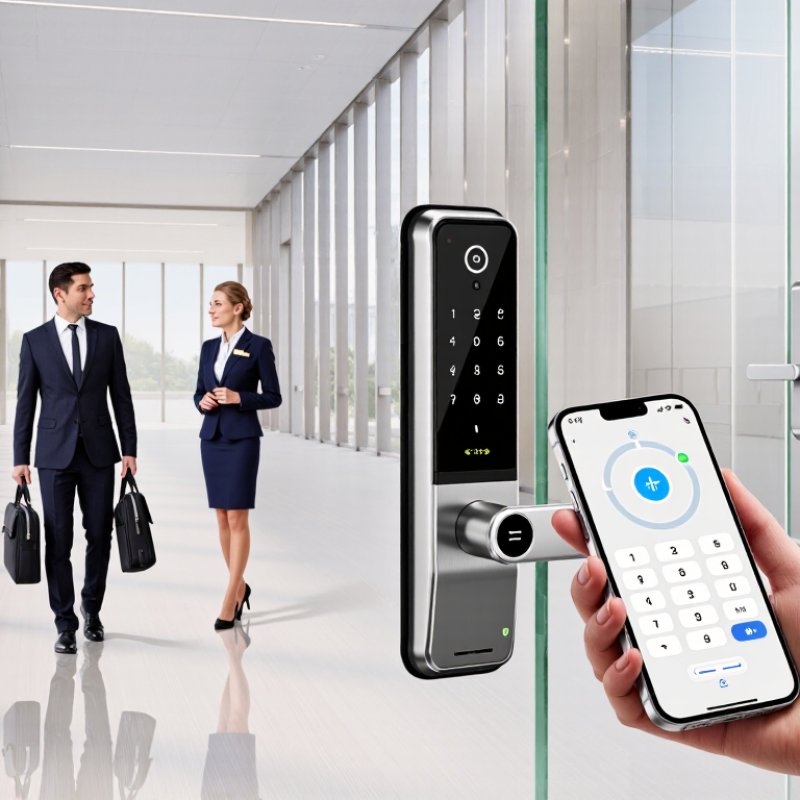
Wireless locks are electronic locking devices that communicate without traditional wiring. They usually use Bluetooth, Wi-Fi, Zigbee, or Z-Wave. A mobile app, keypad, card, or biometric reader sends an encrypted access request. The lock’s controller verifies that request, then activates a small motor or solenoid. Most models also record entry times and send alerts.
This is not magic. Power still matters. Battery-powered locks often use AA or lithium batteries, while connected models may depend on a stable gateway or network. During installation, technicians should test signal strength beside metal doors, concrete walls, and elevator shafts. According to Grand View Research, the global smart lock market was valued at about USD 2.4 billion in 2023, with strong growth expected through 2030. The report reflects rising demand, but growth does not remove practical weaknesses. Poor connectivity can delay access. A forgotten backup method can create unnecessary disruption.
Tips: Check battery life under real usage, not laboratory claims. Confirm compatibility with local wireless standards and building systems. Choose encrypted communication, role-based permissions, and audit logs. Keep a physical emergency method. It sounds old-fashioned. Yet it remains useful. For global buyers, local voltage, climate, data handling rules, and after-sales support deserve equal attention. A lock may work perfectly in a showroom, but fail after months of dust, humidity, or heavy daily use. Testing those conditions before bulk purchasing is the more reliable choice.
Why Are Wireless Locks Suitable for Global Access Control?
Why Choose Wireless Locks for Global Buyers?
Why Are Wireless Locks Suitable for Global Access Control?
Wireless locks suit global access control because buildings rarely share the same layout. In access-control projects, I have found that wireless devices simplify upgrades in offices, schools, and mixed-use properties. They can reduce cabling work and preserve finished walls. This matters in older buildings with concrete surfaces or limited service routes. Authorized users may receive digital credentials, while administrators can review entry records remotely. Access permissions can also change when staff move between locations. Wireless is not magic. Battery planning, signal strength, and network reliability still require careful testing.
Tips: Survey each doorway before installation. Check wall materials, battery access, and local communication requirements. Keep mechanical backup procedures documented. Test offline operation, too. A lock that works only with a perfect connection is a weak solution.
Reliable systems need more than convenient access. They should support encrypted communication, role-based permissions, audit trails, and timely firmware updates. Different regions may require different data-handling practices, so configuration should involve qualified local professionals. My early assumption was that wireless always meant faster deployment. In reality, complex doors and poor radio coverage can slow the project. A measured pilot installation often reveals these issues before wider deployment. Clear maintenance schedules help teams replace batteries before users notice a failure. That practical discipline makes wireless access control more suitable for international buildings.
What Factors Should Global Buyers Consider Before Purchasing?
Why Choose Wireless Locks for Global Buyers?
What Factors Should Global Buyers Consider Before Purchasing?
Global buyers should begin with local compliance, not appearance. Wireless frequencies, radio power, and data rules differ between markets. Ask for test reports, safety certificates, and documented encryption practices. A polished product may still fail regional approval.
Battery performance deserves careful attention. Check expected battery life under real traffic, not ideal laboratory conditions. A busy entrance may unlock hundreds of times daily. Consider emergency access, low-battery warnings, and manual override procedures. Small details matter.
Climate can expose weak designs. Dust, humidity, freezing temperatures, and coastal salt may affect sensors and batteries. Request operating ranges and protection ratings. Integration also requires scrutiny. Confirm compatibility with access software, identity systems, and existing doors. Poor integration creates hidden labor costs.
Installation support varies widely across countries. Buyers should review training, spare parts, warranty terms, and response times before signing. Ask who handles failures after midnight. Total cost includes batteries, licenses, maintenance, and replacements. The cheapest quote may not remain cheap.
Data protection should receive equal attention. Clarify where access records are stored, who can view them, and how long they remain available. A clear audit trail supports accountability, but unnecessary data collection creates risk. No checklist is perfect. Pilot testing in one real location can reveal problems that specifications miss. 马会
How Can Businesses Select the Right Wireless Locking System?
Why Choose Wireless Locks for Global Buyers?
How Can Businesses Select the Right Wireless Locking System?
Wireless locks can simplify access across offices, warehouses, and serviced apartments. They reduce key management and support remote permission changes. However, wireless does not automatically mean secure or suitable. According to Grand View Research’s 2024 Smart Lock Market report, the global market is expected to achieve double-digit growth through 2030. That growth reflects demand, not guaranteed performance. Businesses should examine network stability, battery life, local support, and integration before buying.
Start with the site, not the product brochure. A concrete basement may weaken wireless signals. Metal doors can create another problem. Test signal strength at every entrance, including emergency exits and loading areas. Check whether the system continues operating during internet outages. Battery warnings should reach several administrators, not one busy manager. IBM’s Cost of a Data Breach Report 2024 placed the global average breach cost at US$4.88 million, showing why access credentials need strong protection. Use encrypted communication, multi-factor administration, audit logs, and rapid permission removal.
Tips: Request a live pilot. Measure battery use for 30 days. Review failed-entry logs. Confirm regional data-hosting requirements and technical support hours. Ask who can recover access after a controller failure. A low purchase price may hide installation costs. That is easy to miss. No system is perfect; even a well-tested lock can fail when batteries, networks, or staff procedures are neglected.
Why Choose Wireless Locks for Global Buyers?
Wireless locking systems can reduce cabling requirements and support flexible access management. The chart compares representative line-of-sight communication ranges for commonly used wireless technologies.
How can businesses select the right system? Choose short-range technologies for room-level access, medium-range networks for buildings, and long-range connectivity for distributed sites. Actual performance depends on walls, interference, antenna design, network configuration, and local regulations.