Why Choose a Gramophone Record Player for Your Business?
A Gramophone Record Player can give a business more than vintage charm. It can shape the room’s mood, invite conversation, and make a visit feel memorable. Picture a walnut cabinet beside a café counter, with a record turning slowly under warm light. The sound is tactile and visible. That matters in spaces where atmosphere is part of the customer experience.
Thomas Edison, whose phonograph helped establish recorded sound, predicted, “The phonograph will undoubtedly be devoted to the reproduction of music.” His observation points to music’s lasting role, though a modern business must consider more than nostalgia. A record player needs suitable placement, careful handling, and a reliable supply of records. Staff should also understand basic operation. Small details count.
For a hotel lounge, restaurant, boutique, or listening bar, the right model can become a focal point without overpowering the space. Choose for sound quality, build, serviceability, and the room’s actual needs—not appearance alone. A beautiful machine can still disappoint if it is difficult to maintain or too quiet for the setting. That is worth admitting. Vinyl also takes time and attention, which may not suit every business. This guide explores the practical benefits, costs, and considerations behind choosing a Gramophone Record Player for a commercial space.
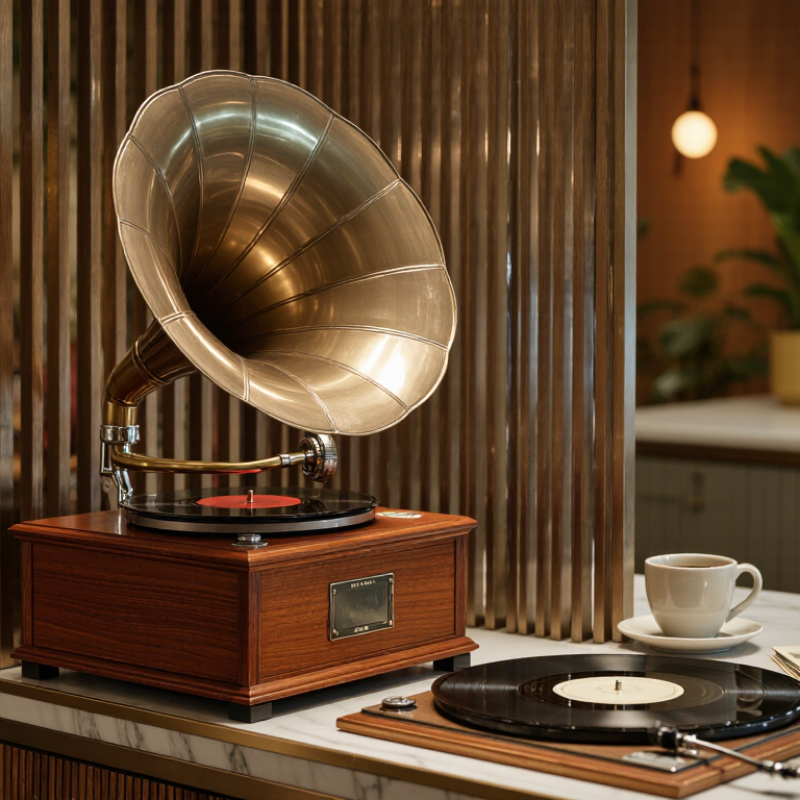
What a Gramophone Record Player Is
A gramophone record player is a device that plays sound recorded in grooves on a rotating disc. A stylus follows those grooves and vibrates, turning tiny movements into an audio signal. In a traditional acoustic gramophone, a horn amplifies the sound mechanically. Many modern record players use a cartridge, cables, and speakers instead. People sometimes use “gramophone” and “record player” interchangeably, though their designs can differ.
For a business, the device can be both a music source and a visible feature. Picture a turntable on a sturdy counter, with sleeves arranged nearby and a record turning at an easy pace. It gives guests a tactile detail that streaming audio cannot quite reproduce. Sound quality depends on the player, record condition, setup, and room acoustics. It is easy to romanticize the experience; changing records and keeping the stylus clean take regular attention.
Tips: Place the player on a level, stable surface away from heavy foot traffic. Check the stylus and volume before opening. Keep records upright and handle them by their edges. A small test session can reveal unwanted vibration or sound that feels too loud.
How Gramophone Record Players Work
Why Choose a Gramophone Record Player for Your Business?
How Gramophone Record Players Work
A gramophone record player turns grooves into audible sound through a chain of precise movements. A motor spins the platter at the speed selected for the record. As the disc turns, a stylus follows its groove and vibrates with its tiny variations. The cartridge converts those vibrations into an electrical signal. That signal travels through a phono preamp, then an amplifier, which powers the speakers. Some players include a built-in preamp; others need an external one. The setup matters.
In a café, shop, or reception area, the moving platter and visible record can add a tactile detail to the space. The sound can feel warm, but it is not automatically better or louder than digital playback. Speaker placement, room noise, and careful volume control all affect what customers hear. A dusty stylus may cause crackling or uneven playback. Records also need gentle handling. I would not treat the player as maintenance-free; that expectation is easy to get wrong.
Tips: Place the player on a stable, level surface away from strong vibration. Keep records upright and clean, and check that the stylus is free of dust before use. Test the volume during quieter hours.
Business Benefits of Using a Gramophone Record Player
A gramophone record player gives a business a distinctive, tactile detail. In a café, hotel lounge, or vintage shop, guests can see the record turn and hear the gentle crackle between songs. That physical presence can invite conversation in a way a hidden speaker rarely does. It feels tangible.
Carefully chosen music can support a space’s character without competing with it. A slower playlist may suit a quiet reading corner, while livelier records can bring warmth to a busy shop floor. The player also offers a natural point of interest: staff can change the record, adjust the volume, and share a little context with curious customers. These small interactions may make a visit feel more personal, though they cannot replace good service or a well-run space.
There are practical considerations. Records need clean, dry storage, and the stylus requires regular care; dust can affect sound and wear. A player also needs a stable surface away from heavy foot traffic, where vibrations may cause skipping. The sound has charm, but it is not always perfect. Some customers may find the crackle distracting, and a small room can become noisy quickly. Test the setup during a normal business day, then adjust placement and volume based on what staff and guests actually notice.
Business Settings Suited to Gramophone Record Players
Why Choose a Gramophone Record Player for Your Business?
Business Settings Suited to Gramophone Record Players
A gramophone record player can suit businesses where atmosphere matters as much as background music. In a small café, it can sit near a window, with records displayed beside the counter. In a hotel lounge, its warm sound and visible mechanics can encourage guests to linger. Independent bookshops, listening rooms, and carefully designed retail spaces may also benefit. The setting should allow people to notice the music without making conversation difficult. It is not a perfect fit everywhere.
Tips: Place the player on a stable, level surface away from heavy foot traffic. Keep it clear of drinks and direct sunlight. Test the sound at different times of day; a quiet morning and a busy evening feel very different.
Consider daily operations before choosing one. Staff need a simple way to change records, and the collection should match the space and audience. Keep spare sleeves nearby, and check the stylus regularly to support consistent playback. Records require handling and storage, so the setup may take more attention than a digital playlist. That trade-off can be worthwhile, though it can also become one more task during a busy shift. A short trial in the actual room can reveal whether the sound, placement, and upkeep work for your business.
Factors to Consider Before Choosing One
Before choosing a gramophone record player for your business, define its role: background music, a listening corner, or a visual centerpiece. Each requires different sound levels, handling, and staff attention. Measure counter depth and guest clearance; a spinning platter beside coffee cups or busy hands is asking for trouble. Decide who will change records and when.
Demand deserves a reality check. RIAA’s 2023 Year-End Revenue Report puts U.S. vinyl revenue at $1.4 billion, up 10% year over year. That signals sustained interest, not guaranteed local sales or longer visits. Test the idea with a small record selection and track usage before buying premium equipment. Check speaker compatibility, replaceable stylus availability, dust protection, and whether staff can operate it without slowing service. A beautiful setup can still sound thin in a noisy room. It happens.
Tips: Ask staff to run a five-minute setup and record-change test during a quiet shift. Keep a soft brush nearby, store sleeves upright, and set a comfortable volume. Budget for wear and occasional repairs, not just the player. Also ask whether guests will actually choose records. Sometimes, no.