
China Top 10 Heat Shrink Wire Terminal Manufacturers

Heat Shrink Wire Terminals combine a metal connection with a heat-activated sleeve that seals around a wire joint. When heated correctly, the tubing contracts and its inner adhesive forms a close barrier. The result can be a cleaner, more protected connection in vehicles, control panels, marine equipment, and other demanding assemblies. Small details matter. Wire range, terminal material, plating, insulation color, and shrink ratio all affect fit and service life. A sleeve that looks sturdy on a sample may behave differently on a production line.

This guide to China’s top 10 manufacturers is intended as a practical starting point, not a universal ranking. It considers product range, manufacturing capability, quality documentation, customization, export experience, and responsiveness to technical questions. Buyers should still request current datasheets and samples, then test crimp strength, insulation recovery, and sealing under their own conditions. Ask how a supplier controls dimensions and lot consistency. Ask, too, what happens when a batch misses specification. That matters. Public information is not always complete, and company capabilities change; that uncertainty deserves attention rather than a confident guess. The manufacturers covered here may suit different needs, from standard butt connectors to terminals made for specific wire sizes or operating environments. Comparing them carefully can help procurement teams narrow choices and start better conversations with suppliers.
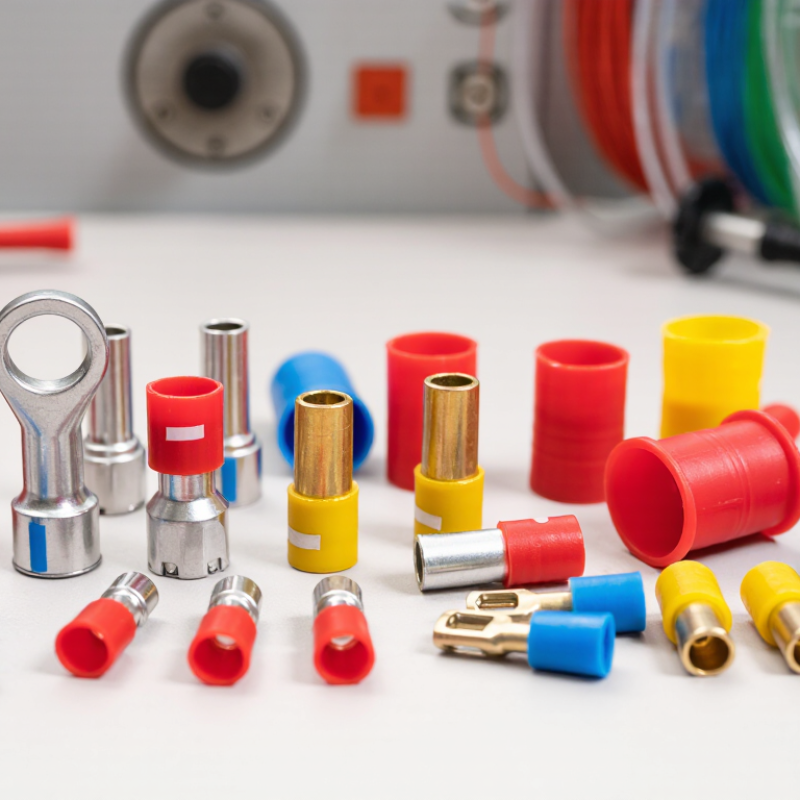
China Top 10 Heat Shrink Wire Terminal Manufacturers

What Heat Shrink Wire Terminals Are and How They Work

Heat shrink wire terminals join a wire to another conductor or an electrical contact. Common forms include butt connectors, ring terminals, and spade terminals. Each has a metal barrel that grips the stripped wire and an outer heat-shrink sleeve. Some sleeves contain an inner adhesive lining.

The connection begins with a correctly sized wire and terminal. Strip the insulation to the length specified for the terminal, insert the conductor fully, then crimp the barrel with a suitable tool. A sound crimp holds the strands firmly without cutting them. Next, apply controlled heat so the sleeve contracts around the barrel and wire insulation. The adhesive, when present, softens and helps seal the joint against moisture and dirt. Not magic.

Good results depend on small details. Match the terminal to the wire gauge, and avoid using an open flame that can scorch the sleeve or insulation. After cooling, check that the sleeve is snug and the conductor does not move under a gentle pull. Still, a sealed-looking joint is not automatically waterproof; performance depends on the terminal’s rating, installation, and conditions. I’ve seen careful heating overlooked, and it can make an otherwise solid crimp unreliable.

How China’s Heat Shrink Terminal Industry Is Structured

China’s heat-shrink wire-terminal industry is a layered supply chain, not a single production line. Upstream suppliers provide copper or brass strip, plating materials, insulating sleeves, and heat-activated adhesive. Terminal makers then stamp, form, plate, assemble, and test components. Some factories focus on high-volume standard terminals; others handle custom dimensions and smaller production runs. Quality checks commonly include crimp pull-force tests, insulation recovery, and visual inspection. Small process differences matter.

The downstream market includes wiring-harness makers serving vehicles, appliances, machinery, and power equipment. The National Bureau of Statistics of China reported that electrical machinery and equipment manufacturing value added rose 12.9% in 2023. The IEA’s Global EV Outlook 2024 estimates that nearly 14 million electric cars were sold worldwide in 2023, around 18% of total car sales. These figures indicate relevant manufacturing demand, but they do not measure heat-shrink terminal sales directly. That distinction matters. In practice, buyers often assess more than unit price: they check material consistency, crimp compatibility, and batch traceability. China’s supplier base is broad, yet capability varies between factories. A polished sample is not enough; production records deserve scrutiny.

How China’s Heat-Shrink Terminal Industry Is Structured

Typical product value chain · Sequence map, not market shares or company rankings

A typical chain moves from copper-alloy and heat-shrink-material inputs through terminal forming, plating, sleeve assembly, testing, and distribution. Adhesive-lined products may include a hot-melt adhesive layer. Manufacturers can combine several stages in-house, and specific processes vary by product.

Criteria for Evaluating Leading Chinese Manufacturers

When comparing Chinese heat shrink wire terminal manufacturers, begin with product evidence, not catalog claims. Check whether datasheets specify conductor size, insulation material, shrink ratio, temperature range, and terminal plating. A reliable supplier should explain how these details relate to the intended application. Ask whether production samples match the stated dimensions and fit common crimping tools. Review inspection records for crimp pull strength, insulation recovery, and visual defects. Small details matter.

Production consistency is as important as a strong sample. Request information about incoming-material checks, batch traceability, and final inspection frequency. A useful factory audit, whether in person or remote, should show real production and test equipment. For heat-shrink terminals, look closely at tubing recovery: uneven shrinking can leave gaps or expose edges. Check how complaints and corrective actions are documented. Clear answers matter. Samples reveal a lot, but they cannot prove long-term consistency by themselves. Compare test reports with the exact product specification, and confirm that report dates and sample descriptions match. A polished catalog is not enough. Some manufacturers may not share every internal record, so weigh what they provide and note what remains unverified. Good sourcing takes careful questions.

Profiles of 10 Heat Shrink Wire Terminal Manufacturers in China

China’s heat-shrink wire terminal manufacturers vary in scale, process control, and product focus. These ten profiles describe distinct supplier types, rather than ranking named companies. One profile centers on broad terminal catalogs, with insulated connectors in common wire sizes. Another focuses on custom tooling for unusual shapes or installation constraints. A third emphasizes crimp consistency, checking sample joints for secure contact and clean insulation coverage. Details matter.

A fourth profile suits buyers needing terminals, tubing, and related accessories from one supplier. A fifth concentrates on small production runs, though its unit costs may be higher. A sixth serves high-volume orders and should be assessed for stable output across repeat batches. A seventh profile highlights material traceability and documented incoming inspections. An eighth focuses on export packaging, using sealed bags and labeled cartons to reduce handling confusion. These capabilities need verification, not assumptions.

The ninth manufacturer type invests in application support, helping buyers match terminal dimensions to wire gauges and operating conditions. The tenth focuses on testing, including checks of shrink behavior, crimp strength, and insulation recovery. Ask for current specifications and representative samples. Inspect markings, fit, and finish under practical installation conditions. A catalog alone proves little. Some suppliers may perform well on standard items but struggle with custom orders; that distinction deserves careful review.

China Top 10 Heat Shrink Wire Terminal Manufacturers - Profiles of 10 Heat Shrink Wire Terminal Manufacturers in China

The entries below are product-category profiles, not verified company profiles or a ranked list of manufacturers. They summarize common heat-shrink terminal constructions and applications; specifications vary by individual product and supplier. No company or brand names are included.

Profile Terminal Type Typical Construction Common Application Selection Considerations Standards and Verification
Profile 01 Heat-shrink butt splice Inline metal barrel with an insulating heat-shrink sleeve; adhesive-lined versions are also available. Joining two compatible conductors in wiring harnesses, equipment, and vehicle electrical systems. Match the barrel to the conductor material and size. Confirm the specified crimping tool, wire range, and sealing instructions. Check the product datasheet for applicable connector and insulation approvals. UL 486C covers splicing wire connectors; applicability depends on the product listing.
Profile 02 Heat-shrink ring terminal Crimp barrel joined to a ring tongue, with a sleeve that shrinks around the wire end after installation. Bolted electrical connections in control panels, vehicles, appliances, and machinery. Select the ring hole to match the stud or fastener and the barrel to match the conductor. Verify installation clearance and required tightening torque for the connection. Check the terminal’s stated wire range, material, and approval marks. UL 486A-486B applies to certain wire connectors; confirm the specific product is covered.
Profile 03 Heat-shrink fork terminal Crimp barrel with an open-ended fork tongue and insulating shrink sleeve. Connections to screw terminals where a forked tongue is suitable for the terminal design. Confirm that the fork dimensions and terminal screw size are compatible. Use the specified conductor range and crimp profile. Verify product-specific certifications and installation requirements. Approval of one terminal design does not automatically apply to another.
Profile 04 Heat-shrink female disconnect Insulated female blade receptacle with a heat-shrink sleeve; some designs include an internal locking feature. Removable connections to compatible male tabs in appliances, automotive wiring, and control equipment. Match tab width and thickness, conductor size, and intended mating force. Confirm whether the receptacle is designed for the application’s vibration conditions. Check the supplier’s dimensional drawing and approval documentation. Do not assume compatibility based only on visual appearance.
Profile 05 Heat-shrink male disconnect Male blade contact with an insulated barrel or sleeve that shrinks around the conductor end. Quick-disconnect wiring assemblies that mate with a compatible female receptacle. Match blade dimensions and conductor range to the mating receptacle. Ensure the connection is fully seated and protected from unintended contact. Confirm applicable product ratings and approvals from the datasheet; ratings depend on the specific terminal and installation.
Profile 06 Heat-shrink bullet connector Male or female cylindrical contact with a crimp barrel and shrinkable insulation. Detachable wiring connections in harnesses and equipment where a compact inline connection is needed. Use matching male and female components from compatible dimensional series. Verify conductor range, retention, and environmental requirements. Use the product drawing and test documentation to confirm mating compatibility and any stated environmental or electrical ratings.
Profile 07 Heat-shrink pin terminal Crimp barrel with a narrow metal pin and an insulating shrink sleeve. Connecting stranded conductors to compatible terminal blocks or devices designed for pin-style terminations. Check pin diameter and length against the receiving terminal. Follow the specified strip length and crimp procedure. Confirm acceptance by the receiving equipment and check the terminal manufacturer’s documentation for applicable approvals.
Profile 08 Heat-shrink flag terminal Angled or side-entry contact connected to an insulated crimp barrel. Connections in confined spaces where a straight terminal may not provide adequate routing clearance. Check the terminal’s orientation, contact dimensions, conductor size, and clearance after installation. Use dimensional drawings and application-specific documentation; the angled form does not itself define an electrical rating.
Profile 09 Heat-shrink step-down butt splice Inline splice designed to connect conductors of different specified sizes, with a heat-shrink insulating sleeve. Harness repairs or transitions between conductors when the selected splice is rated for both wire sizes. Check that each side’s conductor falls within its own stated range. Do not substitute a standard butt splice unless its datasheet allows the combination. Verify the connector’s listed wire combinations, crimping instructions, and any applicable connector approvals.
Profile 10 Heat-shrink closed-end connector Crimp-style connector that joins one or more conductors and encloses the connection end beneath insulating material. Ending or grouping conductors in harnesses and control wiring where a closed termination is appropriate. Confirm the permitted number and size of conductors, conductor preparation, and crimp method. Check whether the design is intended to provide a sealed enclosure. Review the product datasheet for wire combinations, environmental claims, and certifications; sealing performance is product-specific.

How to Compare Suppliers by Quality, Compliance, and Application Needs

China Top 10 Heat Shrink Wire Terminal Manufacturers

Comparing suppliers starts with evidence, not catalog photos. Ask for terminal dimensions, conductor range, insulation material, and plating details. Then review how each supplier checks crimp strength, electrical continuity, and heat-shrink recovery. A neat sample helps. It proves little by itself. Batch records and clear inspection criteria offer a better view of repeatability.

Compliance depends on the destination market and the finished assembly. Request current material declarations and applicable test reports, then confirm they cover the exact terminal and wire combination. Do not treat a certificate as a substitute for product-level evidence. A polished sample can hide production variation; one sample never settles the question. That is easy to overlook when deadlines are tight.

Application fit matters just as much as paperwork. Match the terminal to wire gauge, insulation diameter, operating temperature, moisture exposure, and vibration. For a vehicle harness, for example, check whether the seal remains intact after crimping and heat application. Ask suppliers how they validate those conditions and how they handle changes in materials or tooling. A low price may suit a simple indoor repair, but harsh environments call for stronger verification. Some specifications will still be unclear; document assumptions before ordering.