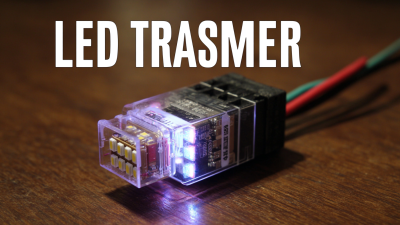
How to Choose the Right LED Transformer?

Choosing the right Led Transformer is not a minor purchasing decision. It affects brightness, safety, energy use, and the service life of every connected LED fixture. A transformer that looks suitable on a product page may still fail under heat, voltage fluctuation, or continuous load. The details matter.

As LED power-supply author Steve Winder has noted, “The power supply is often the weakest link in an LED system.” This observation remains practical on real installations. A reliable selection begins with the LED system’s voltage, wattage, dimming method, and operating environment. For example, a 24-volt LED strip drawing 72 watts should not use a transformer rated exactly at 72 watts. A sensible reserve helps manage heat and startup demand. Many professionals allow approximately 20% to 30% additional capacity, although the manufacturer’s guidance should remain decisive.

Check the enclosure rating too. An indoor cabinet and a damp outdoor sign need different protection. Look for thermal safeguards, overload protection, stable output, and recognized testing marks. Compatibility with trailing-edge, 0–10V, DALI, or PWM dimming may also change the choice. Small details cause expensive callbacks.

Experience still has limits. A calculation can look perfect, yet poor ventilation can shorten component life. I have seen installations focus on brightness while ignoring cable length and voltage drop. That approach needs reconsideration. The best Led Transformer balances electrical specifications, installation conditions, maintenance access, and documented reliability. It should perform quietly today and remain dependable after months of heat, dust, and daily switching.

How to Choose the Right LED Transformer?

Understanding the Role of an LED Transformer

How to Choose the Right LED Transformer?

Understanding the Role of an LED Transformer

An LED transformer controls electrical power before it reaches low-voltage LED fixtures. It converts higher household voltage into a safer, usable output. Without the correct transformer, lights may flicker, overheat, or fail early. The transformer also helps maintain stable brightness when the electrical load changes.

In practical installations, I check the fixture voltage first. Most low-voltage systems require a specific output, such as 12V or 24V. The transformer’s wattage must exceed the total LED load, but not by an excessive margin. A sensible reserve is often around 20 percent. Too little capacity creates stress. Too much capacity may reduce efficiency and complicate dimming performance.

Dimming compatibility deserves careful attention. An LED-rated dimmer and transformer should work together across the expected brightness range. I also inspect the installation location, ventilation, moisture exposure, and cable length. Outdoor areas may require suitable protection ratings and weather-resistant enclosures. Electrical standards matter, so a qualified professional should verify connections and protection devices.

I once assumed that any low-voltage transformer would operate LED lights correctly. That assumption was wrong. Some older units work poorly with the small electronic loads of LEDs. The result can be buzzing or unstable light. Specifications are useful, but they are not everything. Real testing under normal load can reveal problems that a product sheet misses.

Matching Transformer Voltage and LED Load Requirements

How to Choose the Right LED Transformer?

Matching Transformer Voltage and LED Load Requirements

When choosing an LED transformer, match its output voltage to the LED system exactly. The key is simple: voltage must match, while wattage must provide enough capacity. A 12-volt LED strip needs a 12-volt constant-voltage transformer. A 24-volt strip requires 24 volts instead. Never connect a 12-volt product to a 24-volt supply. I once saw a small installation fail because the voltage label was overlooked. That mistake caused overheating and uneven brightness.

Tips: Check the LED label first. Add the total wattage of every connected section. Then choose a transformer with roughly 20% extra capacity. For example, a 60-watt load usually needs a supply rated near 75 watts. Do not rely on guesswork.

Load length also matters. A five-meter strip may draw more current than a short cabinet light. Measure the actual cable distance, because voltage drop can reduce brightness at the far end. Longer runs may need thicker wiring, separate feeds, or a higher-rated transformer. Dimmers and sensors also consume capacity, even if their power use seems minor. For outdoor installations, verify the transformer’s environmental rating and provide proper ventilation. Professional installers should confirm ratings with technical documents, not appearance alone. I still recheck calculations before powering a system. It feels repetitive, but it prevents expensive surprises.

Choosing the Correct Transformer Type and Capacity

Choosing the Correct Transformer Type and Capacity

Do not choose an LED transformer by wattage alone. First, match its output to the lighting load. A 12-volt or 24-volt LED strip usually needs a constant-voltage driver. Individual high-power LEDs often require a constant-current driver. Confusing these types can cause flicker, overheating, or early failure.

The International Energy Agency estimates that lighting consumes about 15% of global electricity, so small efficiency losses can become significant across many installations.

Calculate the connected load before selecting capacity. For example, a 24-volt strip rated at 4 watts per metre needs 48 watts over 12 metres. An 80% loading target requires at least a 60-watt driver.

Add more reserve when cables are long, temperatures are high, or the fixture has frequent switching. A larger unit is not automatically safer. It may operate inefficiently at very low loads.

The U.S. Department of Energy’s Solid-State Lighting reports also emphasize driver efficiency, thermal management, and control compatibility as major factors in system performance.

Check input voltage, dimming method, enclosure rating, and certification requirements. Keep cable runs short where possible, and measure voltage at the farthest fixture. A few volts can disappear in thin wiring.

That detail is easy to miss. I would also recheck the real load after installation, because published wattage can differ from field measurements. The perfect calculation is sometimes only a starting point.

Checking Dimming, Wiring, and Installation Compatibility

How to Choose the Right LED Transformer?

Checking Dimming, Wiring, and Installation Compatibility

Choosing the right LED transformer starts with compatibility, not wattage alone. For low-voltage tape or spotlights, match the output voltage exactly. 12V products need 12V, while 24V products need 24V. Calculate the connected load and keep a practical reserve of 20–30 percent. Oversizing too far can create unstable dimming at low loads. The U.S. Department of Energy’s 2023 Energy Savings Forecast estimated LEDs represented 48% of U.S. installed lighting stock in 2020. It projects 86% by 2035. That growth makes driver selection more important, not less.

Check the dimming method before purchase. A phase-cut dimmer may require leading-edge or trailing-edge compatibility. PWM, 0–10V, and DALI systems need matching control inputs. NEMA SSL 7A identifies phase-cut compatibility as a key solid-state lighting requirement. IEC 61347-2-13 also sets safety requirements for LED controlgear. Confirm polarity, minimum load, earth continuity, cable length, and voltage drop. Place connections inside an approved enclosure, away from heat and moisture. A small mistake I still see is reversed polarity. The specification sheet was clear; site conditions were not.

Tips: Test the transformer with the actual dimmer and full cable run. Check flicker at 10%, 50%, and 100% output. Leave ventilation space. Photograph every connection before closing the box. If the load is below the minimum rating, revise the circuit. A qualified electrician should verify mains wiring and local code requirements.

How to Choose the Right LED Transformer? - Checking Dimming, Wiring, and Installation Compatibility

Selection Dimension What to Check Typical Requirements Compatibility Guidance Common Risk if Incorrect
Input Voltage Match the transformer input rating with the local electrical supply. Common systems use 120 V AC, 230 V AC, or a universal 100–240 V AC input. Select a unit rated for the actual supply voltage and frequency shown on the installation circuit. Overheating, failure, electric shock, or permanent damage.
Output Voltage Confirm whether the LED load requires constant voltage or constant current. Constant-voltage LED products commonly require 12 V DC or 24 V DC. Constant-current products specify an output current, such as 350 mA or 700 mA. The transformer output type and rating must match the LED driver requirement exactly. Flickering, reduced lifespan, overheating, or immediate LED failure.
Load Power Add the wattage of all connected LED fixtures or strips. The connected load should remain within the rated output. A design margin of approximately 20% is commonly used. For a 48 W load, a supply rated at about 60 W or higher provides useful reserve capacity. Voltage drop, nuisance shutdown, excessive heat, or shortened service life.
Dimming Method Identify the dimmer control method and verify that the transformer supports it. Common methods include phase-cut leading-edge, phase-cut trailing-edge, 0–10 V, PWM, and DALI. The transformer, dimmer, and LED load must support the same control method. Do not assume a standard incandescent dimmer is compatible. Flicker, buzzing, limited dimming range, unstable operation, or dimmer overheating.
Minimum Dimming Load Check the minimum and maximum load limits of the dimmer and transformer. Some phase-cut dimmers require a minimum load, while LED loads may be much lower than older lamp loads. Use a dimmer specifically rated for low-wattage LED applications when the total load is small. Dropout, flashing, poor low-level performance, or failure to switch off completely.
Wiring Polarity For DC output, identify positive and negative terminals before connection. Use correct polarity and avoid reversing positive and negative conductors. Follow the terminal markings and verify connections with the power disconnected. The LED may not operate, and sensitive components may be damaged.
Cable Length and Voltage Drop Consider cable length, conductor size, and load current. Longer low-voltage runs require larger conductors or distributed power injection to limit voltage drop. For long LED-strip installations, feed power at multiple points when recommended by the product instructions. Uneven brightness, color variation, overheating at connection points, or unreliable operation.
Indoor or Outdoor Use Review the enclosure rating and the environmental conditions at the installation location. Indoor dry locations may use a basic enclosure. Damp or outdoor locations require suitable moisture and dust protection. Install outdoor-rated equipment in a protected position and use compatible cable glands and junction boxes. Corrosion, short circuits, insulation breakdown, or electric shock.
Ventilation and Temperature Check the permitted ambient temperature and provide adequate heat dissipation. Do not cover the transformer with insulation or install it in a sealed space unless the product is designed for that use. Leave clearance around ventilation surfaces and keep the unit away from direct heat sources. Thermal shutdown, reduced output, premature aging, or fire risk.
Installation Location Confirm that there is sufficient space for mounting, wiring, inspection, and future replacement. The unit should be securely mounted on a suitable surface and remain accessible for maintenance where required. Avoid loose placement, high-vibration areas, water exposure, and locations without airflow. Mechanical damage, poor cooling, difficult servicing, or unsafe connections.
Safety and Certification Check the product marking, wiring instructions, protection features, and applicable local requirements. Look for protection against short circuit, overload, and over-temperature where applicable. Use a qualified electrician for mains-voltage wiring and follow local electrical codes. Unsafe operation, failed inspection, property damage, or personal injury.
Quick Selection Rule: Match the input voltage, output type, output voltage or current, total load, dimming method, environmental rating, and installation conditions before connecting the LED transformer.

Evaluating Safety, Efficiency, and Long-Term Reliability

Choosing an LED transformer starts with safety, not wattage. Check output voltage, insulation, overload protection, short-circuit response, and thermal limits. IEC 61347-2-13 provides safety requirements for LED controlgear, including protection against electric shock and abnormal operation. A transformer should also match the installation environment. Damp locations need appropriate ingress protection, while enclosed ceilings require careful heat evaluation.

Efficiency matters beyond the label. The International Energy Agency estimates that lighting consumes about 15% of global electricity. The U.S. Department of Energy reports that LED lighting can use at least 75% less energy and last up to 25 times longer than incandescent lighting. Yet a poorly matched transformer can waste energy through heat, especially at low loads. Review efficiency at 25%, 50%, and 100% load. Standby consumption deserves attention too. Small losses accumulate.

Reliability is less visible. Look for documented testing, stable output, surge protection, and a realistic ambient-temperature rating. Electrolytic capacitors often age faster in hot enclosures. I have seen installations fail early because the transformer was technically compatible but poorly ventilated. That mistake is easy to repeat. Choose a unit with traceable test records, clear wiring instructions, and a warranty supported by measurable conditions. Do not trust impressive claims alone. Evidence matters more.

How to Choose the Right LED Transformer?

Evaluating Safety, Efficiency, and Long-Term Reliability

How to read the chart: Efficiency is shown at common operating loads. Electronic isolated LED drivers generally maintain higher efficiency across the load range, while magnetic transformers typically lose more energy as heat.

Selection guidance: Confirm electrical isolation, overload and short-circuit protection, thermal performance, certification requirements, and the manufacturer's rated service life before selecting a transformer. The values shown are representative non-brand industry figures and should be verified against the final product datasheet.