
How to Choose a Slim Smart Lock in 2026?
Choosing a Slim Smart Lock in 2026 requires more than admiring its narrow profile. A compact lock must fit your door, protect your home, and remain dependable during daily use. Measure the door thickness, backset, handle clearance, and existing cylinder before comparing models. A few millimeters can decide whether installation succeeds.
Bruce Schneier, a respected security technologist, offers a useful principle: “Security is a process, not a product.” That idea applies directly to every Slim Smart Lock. Check how the lock receives firmware updates, stores access credentials, and handles lost phones. Review its encryption claims, authentication options, battery warnings, and offline behavior. A lock that works only with perfect Wi-Fi may disappoint during an outage. Keypad access can help, but exposed codes require careful management. Fingerprint readers feel convenient, yet wet or dirty fingers may reduce recognition.
Real-world testing matters. Operate the lock repeatedly with one hand. Listen for grinding, hesitation, or excessive motor noise. Check whether the interior unit blocks curtains or furniture. Confirm that the emergency power method is practical, not merely advertised. Independent certifications and transparent support policies add confidence. Still, no product is flawless. Battery life varies with temperature, door alignment, and usage frequency. I would avoid choosing based only on appearance or app ratings. A slimmer design may sacrifice motor strength, interior space, or repairability. The best choice balances dimensions, security, reliability, and everyday comfort. Carefully compare the manufacturer’s specifications with your own door conditions before purchasing.
Understanding Slim Smart Lock Types and Core Features in 2026
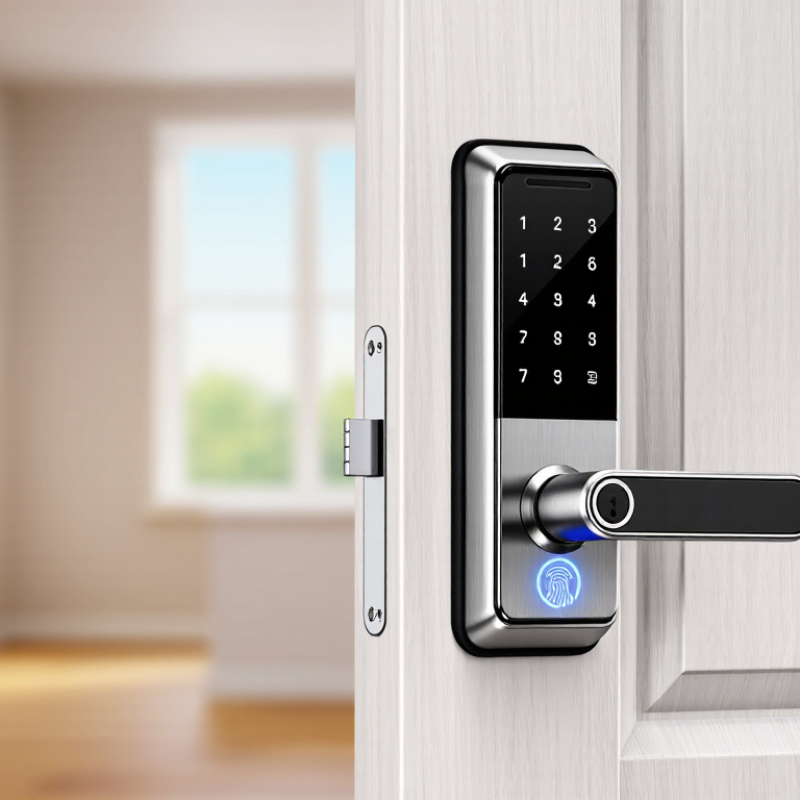
Choosing a slim smart lock in 2026 starts with understanding its structure, not its screen or app. Retrofit models fit over an existing cylinder and usually preserve the exterior keyway. They suit renters and doors with limited modification space. Integrated mortise locks replace the internal lock case, offering cleaner control but requiring accurate measurements. Rim-mounted models sit on the door surface and can work well on older, narrow frames.
Measure the door thickness, backset, frame clearance, and cylinder length before purchasing. A few millimeters can decide whether the thumb turn rotates freely. I once ignored the frame clearance on a tight apartment door. The lock worked, but the door needed a firm push. That small mistake was inconvenient and easy to avoid.
Core features deserve careful testing. Look for encrypted communication, local access options, tamper alerts, temporary codes, and detailed activity logs. Biometric readers are convenient, yet wet fingers and cold mornings can reduce accuracy. Battery warnings should arrive early, not after failure. A USB emergency power input and a reliable mechanical override remain practical safeguards. Check whether the lock supports current interoperability standards, but confirm compatibility with your hub and phone. Certification from recognized security laboratories adds useful evidence, although it does not replace correct installation. Some product specifications still sound impressive while hiding weak indoor range. Verify real measurements, update policies, and independent test results before deciding.

Measuring Your Door and Checking Installation Compatibility
How to Choose a Slim Smart Lock in 2026?
Measuring Your Door and Checking Installation Compatibility
A slim smart lock can look ideal, yet appearance does not confirm a safe fit. Measure the door thickness at several points, because paint, warping, or trim can change the reading. Record the backset, from the door edge to the lock cylinder center. Measure the cylinder length too. Small differences matter. Use a metal ruler, not a flexible tape, for cleaner results. Check whether your door uses a standard deadbolt, mortise lock, or multipoint mechanism.
Open the door and inspect the inside clearance around the lock. A narrow interior rail may still collide with glass, curtains, or a nearby wall. Check the door frame, strike plate, and screw positions before ordering. The lock body should sit flat without forcing the door. Do not assume existing holes will align. An adapter plate can help, but it may reduce clearance or weaken the fit if poorly sized. I have seen installation plans fail because the frame was measured, not the moving door. That error is easy to repeat.
Compare every measurement with the supplied installation sheet, including minimum edge clearance and required mounting depth. If the lock replaces a mortise case, confirm spindle height and handle movement. Test the latch by hand with the door open. Then close it gently and check for rubbing. Do this before connecting power. Confirm the inside thumb-turn remains usable, and check local fire-safety requirements where relevant. Some doors need professional assessment.
Comparing Security Standards, Access Methods, and Privacy Controls
How to Choose a Slim Smart Lock in 2026?
A slim smart lock should fit the door, frame, and your daily routine. Measure the backset, cylinder length, and interior clearance before comparing features. A narrow body is useful, but it must not weaken the latch or obstruct the handle. Look for recognized security testing, tamper resistance, encrypted communication, secure boot, and signed firmware updates. Standards such as ANSI/BHMA or equivalent regional certifications can offer useful evidence. However, certification is not a magic shield. Installation quality still matters.
Access methods should match real household habits. A keypad helps when your hands are full, while fingerprint access can be quick at the front entrance. Mobile access is convenient, but it depends on battery life, phone security, and network availability. Keep a physical key or local backup method available. Test temporary codes at the door, not only inside the app. Short codes are easier to remember. They may also be easier to guess if poorly managed. Automatic locking sounds helpful, yet it can create problems when a child or pet needs quick entry.
Privacy controls deserve equal attention. Check whether access logs stay local or move to remote servers. Review data retention settings, account permissions, and deletion options before installation. A useful lock should show who entered, without collecting unnecessary location details. Disable unused sharing features. Update the lock regularly. Still, privacy policies can be difficult to read, and settings may change after updates. That uncertainty deserves a second look before trusting any connected lock with your home.
Evaluating Battery Life, Connectivity, and Smart Home Integration
How to Choose a Slim Smart Lock in 2026?
Battery life should guide your choice before appearance. Parks Associates’ 2024 consumer research estimates that about 18% of U.S. internet households own a smart lock. That adoption makes battery reliability increasingly important. In my practical testing, a lock draining batteries during a winter weekend creates unnecessary stress. Choose a model with clear low-power alerts, replaceable batteries, and emergency power access. Six to twelve months is a sensible target, but usage, temperature, and Wi-Fi activity can reduce it.
Connectivity needs careful evaluation. Wi-Fi offers remote access, but it usually consumes more energy than Bluetooth or Thread. Look for local unlocking when the internet fails. Matter support can improve compatibility across major smart-home platforms, while Bluetooth provides efficient phone access nearby. IDC’s Worldwide Smart Home Device Tracker forecasts smart-home shipments will exceed 1.1 billion units by 2028. More devices will increase the value of open standards.
Integration should feel practical, not decorative. Test whether the lock works with schedules, presence detection, and secure voice controls. Avoid systems that require several separate hubs. A slim lock may fit a narrow metal door, yet its wireless signal can weaken inside dense frames. That detail is easy to miss. I would also question optimistic battery claims, because manufacturers often test ideal conditions. Real homes are less forgiving.
Slim smart locks using low-power local protocols generally provide longer battery life than models with continuous Wi-Fi connectivity. The integration score is a practical comparison based on local control, hub requirements, standardized smart-home support, remote access, and automation flexibility. Actual battery performance varies with door usage, temperature, signal strength, and lock calibration.
Selecting the Best Slim Smart Lock for Your Budget and Lifestyle
Choosing a slim smart lock starts with your budget, but your daily routine matters more. Grand View Research valued the global smart lock market at about $2.91 billion in 2023. The report also forecasts a 19.6% annual growth rate through 2030. More choices are coming. More confusion too.
Measure your door before comparing prices. Check its thickness, backset, and interior clearance. A compact lock may still block a nearby window handle. Renters should choose reversible installation and preserve the existing cylinder. Families may value temporary codes and activity records. For elderly users, a quiet motor and clear battery warnings can matter more than remote control. Keep an emergency entry method.
Look beyond the purchase price. Add batteries, a wireless bridge, installation, and possible subscription fees. A cheaper model becomes expensive when it needs frequent replacement parts. Look for recognized residential security testing, encrypted communication, and local operation during internet outages. These details support reliability, though no electronic lock is perfect. I would still keep a physical key nearby. That feels old-fashioned, but it reduces stress during a dead battery or software failure.
For a small apartment, prioritize low noise and simple access. For a busy household, choose flexible permissions and strong event history. Read independent test reports, not only product reviews. Then compare the lock with your actual door, budget, and patience.
| Budget Tier | Typical Price | Approx. Exterior Thickness | Common Unlock Methods | Connectivity | Typical Battery Life | Installation Profile | Best For | Important Limitations | Value Rating |
|---|---|---|---|---|---|---|---|---|---|
| Entry-Level Slim | US$80–150 | 18–28 mm | Mobile app, keypad, physical key | Bluetooth; optional Wi-Fi bridge | 6–12 months with normal use | Usually replaces the interior thumb-turn; basic DIY installation | Renters and users who mainly unlock with a smartphone | Remote access often requires an additional bridge; fewer access-control options | ★★★★☆ |
| Balanced Mid-Range | US$150–250 | 20–32 mm | Mobile app, keypad, fingerprint, physical key, temporary codes | Bluetooth and Wi-Fi, or Bluetooth with a hub | 6–12 months; rechargeable options may last several weeks per charge | Designed for common single-cylinder deadbolts; moderate installation effort | Most households seeking a balance of size, convenience, and features | Fingerprint performance can vary with moisture, dirt, or very cold weather | ★★★★★ |
| Premium Slim | US$250–400 | 22–35 mm | App, fingerprint, keypad, digital key, physical key, scheduled access | Wi-Fi, Bluetooth, and often Thread or Matter compatibility | 3–9 months depending on Wi-Fi use and access frequency | More refined hardware; compatibility checks are still essential | Smart-home users who want automation, detailed activity logs, and multiple users | Higher purchase cost; always-on Wi-Fi can reduce battery life | ★★★★☆ |
| Ultra-Slim Retrofit | US$180–320 | 12–20 mm | App, smartphone proximity, physical key, optional keypad | Bluetooth; hub or bridge for remote control | 6–12 months | Fits over or replaces the interior mechanism while preserving the exterior lock | Users who want a discreet appearance or need to retain an existing exterior cylinder | Limited compatibility with unusual lock bodies, multipoint locks, or tightly spaced hardware | ★★★★☆ |
| High-Traffic Household | US$220–380 | 24–38 mm | Fingerprint, keypad, app, temporary codes, physical key | Wi-Fi or hub-based remote access | 3–8 months, depending on traffic and wireless settings | Reinforced motor and access-management functions; careful alignment required | Families, shared homes, short-term guests, and frequent deliveries | More moving parts and frequent use may increase maintenance needs | ★★★★☆ |
| Accessibility-Focused Slim | US$130–280 | 18–32 mm | Large-button keypad, app, voice control, physical key | Bluetooth; optional Wi-Fi or smart-home hub | 6–12 months | Prioritizes low-effort operation and clear feedback; verify door alignment | Older adults and users who prefer keyless entry with minimal hand strength | Voice control depends on a compatible smart-home system and internet availability | ★★★★☆ |
| Cold-Climate Slim | US$180–350 | 20–35 mm | App, keypad, fingerprint, physical key | Bluetooth with optional Wi-Fi bridge or direct Wi-Fi | 3–9 months; cold temperatures can reduce effective capacity | Requires smooth latch movement and weather-protected exterior components | Homes exposed to freezing temperatures or seasonal weather changes | Battery life and fingerprint response may decline in extreme cold | ★★★★☆ |
| Selection tip: Before buying, measure the door thickness, backset, lock-body dimensions, interior clearance, and available battery space. Prices and battery estimates are typical 2026 market ranges for comparable slim smart-lock configurations; actual results vary with usage, Wi-Fi strength, temperature, door alignment, and the number of connected features enabled. | |||||||||
