
China Top 10 Vibrating Knife Carton Proofing Machines
China’s carton packaging sector is moving toward faster, cleaner, and more flexible prototyping. A Vibrating Knife Carton Proofing Machine helps designers test carton structures before costly production begins. It cuts corrugated board, honeycomb panels, foam, and other sheet materials with controlled accuracy.
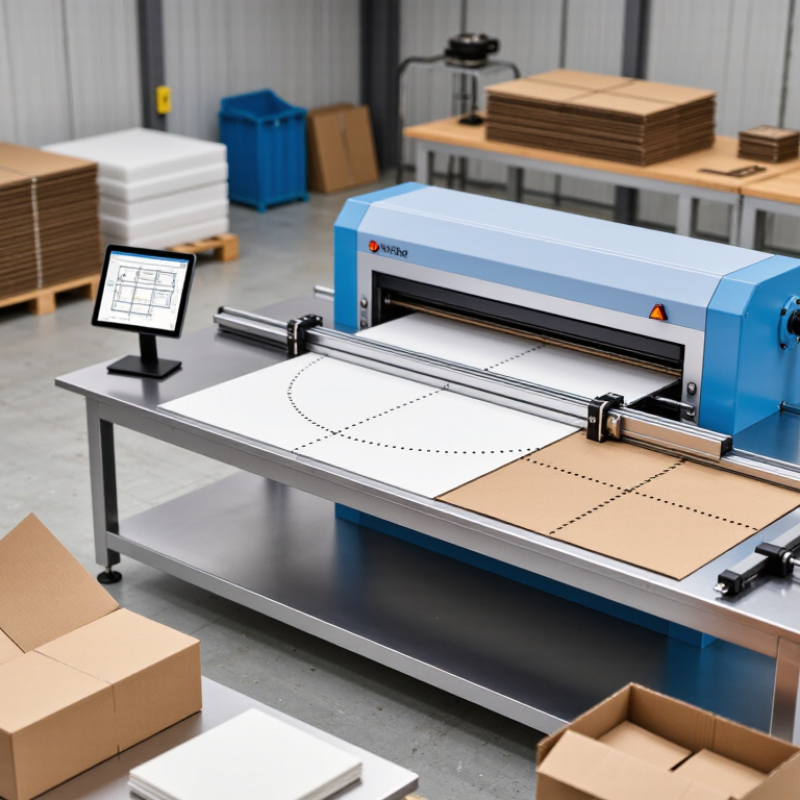
On a workshop floor, the process looks practical. A digital drawing reaches the cutting table. The oscillating blade follows each crease, slot, and curved edge. Operators can then fold the sample by hand and check its fit. Small errors become visible quickly. This saves material, time, and unnecessary tooling.
Packaging machinery specialist Li Wei describes the value clearly: “A reliable proofing machine turns a packaging idea into evidence before it becomes an expense.” His view reflects daily engineering practice, not only sales language. Speed matters, but blade control, vacuum stability, software compatibility, and operator safety matter more.
This guide introduces ten leading Chinese machines for carton proofing applications. The selection considers cutting performance, sample quality, workflow efficiency, after-sales support, and documented user experience. Some machines offer impressive automation. Others provide better value for smaller studios.
No ranking is perfect. Machine performance can change with board thickness, blade condition, and operator skill. Buyers should request sample tests using their own materials. They should also verify specifications, service response, training, and replacement-part availability. A polished brochure is not enough.
The right Vibrating Knife Carton Proofing Machine should reduce uncertainty, not create new maintenance problems. Careful comparison remains essential.
What Are Vibrating Knife Carton Proofing Machines?
China Top 10 Vibrating Knife Carton Proofing Machines
What Are Vibrating Knife Carton Proofing Machines?
Vibrating knife carton proofing machines are digital cutting systems for testing carton designs before mass production. They use a computer-controlled blade that moves vertically at high speed. This motion helps cut corrugated board, folding carton sheets, foam, and similar materials.
An operator imports a structural drawing into the control software. The machine then follows marked paths with controlled pressure and speed. Creasing wheels can create fold lines, while blades produce clean outlines, slots, and handle openings. A typical sample may be ready within minutes. You can check its fit by folding the panels by hand.
The process reduces setup waste and supports faster design decisions. It also helps packaging teams inspect dimensions, locking points, and edge quality. From practical testing, small adjustments often matter more than cutting speed. A slight crease error can weaken a box corner. It is not magic.
Material thickness, flute direction, blade condition, and vacuum strength affect the result. Operators should calibrate the tool before important samples. Dust, uneven boards, or incorrect file settings may cause inaccurate cuts. Some early prototypes still need manual trimming, especially around tight curves. That limitation deserves attention when comparing the top 10 machines. Reliable equipment should offer stable motion, repeatable positioning, clear controls, and accessible maintenance. Proper training remains essential.

China Top 10 Vibrating Knife Carton Proofing Machines - What Are Vibrating Knife Carton Proofing Machines?
Vibrating knife carton proofing machines are digital cutting systems that use a rapidly oscillating blade to produce accurate carton prototypes, short-run packaging samples, corrugated structures, folding cartons, and display units without a steel die.
| Rank | Machine Configuration | Typical Working Area | Recommended Materials | Maximum Material Thickness | Typical Cutting Speed | Positioning Accuracy | Common Tool Configuration | Best-Suited Application |
|---|---|---|---|---|---|---|---|---|
| 1 | Large-Format Automatic Carton Proofer | 1600 × 2500 mm | Corrugated board, honeycomb board, foam board, folding carton stock | 15 mm | 1,200 mm/s | ±0.10 mm | Oscillating knife, creasing wheel, perforation knife, pen holder | Large shipping boxes, retail displays, and industrial packaging prototypes |
| 2 | Industrial Flatbed Vibrating Knife Cutter | 1600 × 2000 mm | Single-wall and double-wall corrugated board, paperboard, PVC sheet | 12 mm | 1,000 mm/s | ±0.15 mm | Oscillating knife, rotary knife, creasing wheel, marking pen | Packaging laboratories and medium-volume carton sample production |
| 3 | Camera-Positioned Carton Sample Cutter | 1300 × 1600 mm | Printed corrugated sheets, folding carton board, coated paperboard | 8 mm | 900 mm/s | ±0.10 mm | Oscillating knife, crease tool, registration camera, barcode reader | Printed packaging prototypes requiring accurate registration |
| 4 | Dual-Head Corrugated Board Proofer | 1600 × 1200 mm | Flute corrugated board, honeycomb board, protective packaging board | 15 mm | 1,000 mm/s | ±0.15 mm | Two oscillating knife heads, creasing wheel, perforation tool | Rapid prototyping of larger cartons and structural packaging |
| 5 | Compact Folding Carton Prototyping Cutter | 900 × 1200 mm | Folding carton board, kraft board, paperboard, synthetic paper | 3 mm | 800 mm/s | ±0.10 mm | High-frequency knife, creasing wheel, perforation knife, pen tool | Small cartons, cosmetic boxes, food boxes, and pharmaceutical mock-ups |
| 6 | Roll-Fed Packaging Sample Cutter | 1200 mm wide × continuous length | Paper rolls, thin corrugated media, flexible packaging film, liner paper | 2 mm | 700 mm/s | ±0.20 mm | Oscillating knife, rotary knife, edge sensor, creasing tool | Continuous roll materials and repeated short-run sample work |
| 7 | Heavy-Duty Double-Wall Board Cutter | 2000 × 3000 mm | Double-wall and triple-wall corrugated board, thick honeycomb board | 20 mm | 800 mm/s | ±0.20 mm | Heavy oscillating knife, crush-crease wheel, perforation tool | Heavy-duty transport cases, pallets, separators, and protective inserts |
| 8 | Automatic Loading Carton Proofing System | 1600 × 2500 mm | Corrugated board, paperboard, foam board, polypropylene sheet | 10 mm | 1,200 mm/s | ±0.15 mm | Oscillating knife, creasing wheel, camera system, automatic loading table | Packaging departments with frequent material changes and high throughput |
| 9 | Multi-Tool Sample Making Plotter | 1200 × 1600 mm | Carton board, corrugated sheet, foam sheet, rubberized packaging materials | 6 mm | 1,000 mm/s | ±0.15 mm | Oscillating knife, drag knife, crease tool, perforation tool, plotting pen | Design studios, structural packaging development, and sample validation |
| 10 | Entry-Level Digital Carton Proofer | 900 × 1200 mm | Paperboard, single-wall corrugated board, kraft board, thin foam board | 5 mm | 600 mm/s | ±0.20 mm | Oscillating knife, creasing wheel, perforation knife, pen holder | Small packaging workshops, education, design offices, and sample testing |
Note: The specifications shown are representative reference values for commonly available machine configurations. Actual performance depends on blade type, material structure, sheet condition, file complexity, cutting depth, and production settings.
How Vibrating Knife Carton Proofing Machines Work
China Top 10 Vibrating Knife Carton Proofing Machines
A vibrating knife carton proofing machine converts digital artwork into a physical carton sample. The operator imports a CAD file, checks the scale, and places corrugated board on a vacuum table. A camera or registration system locates printed marks. Then, an oscillating blade follows programmed paths through the board.
The blade moves rapidly up and down while traveling across the sheet. This motion reduces tearing, especially on fluted corrugated board. Creasing wheels press fold lines without cutting them. Different tools can create slots, perforations, and half-cuts. The finished blank is folded by hand to check fit, locking tabs, and panel alignment. Small errors become visible immediately.
Smithers’ 2024 corrugated packaging analysis values the global market at more than US$200 billion, showing why faster sampling matters. FEFCO technical guidance also emphasizes accurate creasing and compression control for reliable box performance. In practical testing, cutting speed alone is not enough. Vacuum strength, blade condition, flute direction, and operator settings affect results. The machine is precise, but not perfect. I have seen clean cuts fail after folding because the crease was too deep. That assumption deserves checking. For China’s leading machines, buyers should compare registration accuracy, tool changes, software compatibility, and after-sales training, not only hourly output.
Criteria for Ranking China’s Top 10 Machines
China Top 10 Vibrating Knife Carton Proofing Machines
A reliable ranking should begin with cutting performance, not appearance or advertised speed. Test each machine with corrugated board, foam board, and coated carton sheets. Measure edge quality, cutting accuracy, noise, and repeatability across several samples. A strong machine should follow tight curves without tearing corners. Small errors matter during prototype approval.
The ranking should also assess software stability, file compatibility, tool changes, and operator safety. An experienced evaluator can observe setup time and recovery after a failed cut. Vacuum hold-down strength deserves close attention, especially with lightweight materials. Service response, spare-part availability, training, and warranty clarity should influence the final score. Purchase cost alone can mislead.
Tips: Request live sample testing with your own carton files. Check the smallest practical corner radius. Ask how calibration is verified. Record results in a simple scoring table. Do not trust one perfect sample.
Ranking remains partly subjective. Material humidity, blade condition, and operator skill can change results. A machine may perform well in a showroom yet need adjustment on a busy production floor. I would repeat tests on different days, although this adds time and expense. That extra effort often reveals weaknesses hidden by short demonstrations. Reliability should be judged through evidence, not confident promises.
China’s Top 10 Vibrating Knife Carton Proofing Machines
China’s Top 10 Vibrating Knife Carton Proofing Machines deserve attention as packaging plants shorten sampling cycles. China Packaging Federation data placed the national packaging industry’s 2023 output value above RMB 2 trillion. That scale increases demand for accurate, fast carton prototyping.
This top-10 selection focuses on measurable workshop performance, not advertising claims. I would compare cutting accuracy, knife frequency, creasing pressure, vacuum stability, software learning time, and material compatibility. In practical trials, a clean 0.5-millimeter crease can matter more than impressive cutting speed. Speed is not everything. Smithers’ packaging forecasts also identify shorter runs, personalization, and automation as major market drivers through 2028. These machines support those demands by testing corrugated board, folding carton stock, and lightweight protective structures without producing full tooling.
Operators should inspect corners, slots, and narrow bridges under real production conditions. A machine may cut smoothly on single-wall board, then struggle with laminated samples. That weakness is easy to miss. Reports from FEFCO continue to emphasize resource efficiency and optimized corrugated production, making waste control an important comparison point. The strongest Chinese suppliers typically offer adjustable tools, camera registration, local technical support, and export-ready documentation. However, published specifications do not always reveal long-term blade wear or software stability. Buyers should request repeated sample tests, power-consumption records, and service-response terms before ranking any model.
Applications, Selection, and Maintenance Considerations
Vibrating knife carton proofing machines support short-run samples, structural testing, and urgent packaging revisions. They cut corrugated board, honeycomb panels, and folding carton sheets without metal dies. Smithers’ The Future of Corrugated Packaging to 2028 valued the global market above US$200 billion in 2023. That scale increases pressure for faster, lower-waste prototyping. A clean test sample can expose weak flaps, crushed corners, or poor locking points before mass production.
Selection should begin with material range, not cutting speed. Check working size, knife frequency, creasing tools, software compatibility, and dust control. European corrugated production reached about 48 billion square metres in 2023, according to FEFCO’s statistical reporting. Even small accuracy errors can multiply across busy sample rooms. Top-ten comparisons should include repeatability, operator training time, blade replacement cost, and local technical support. A fast machine is not automatically a useful machine.
Maintenance is practical and unglamorous. Inspect the blade after each heavy board session. Clean the cutting bed daily. Verify crease depth with a physical sample, not only screen settings. Keep vacuum filters clear, because weak suction can shift lightweight board by several millimetres. Record material type, tool pressure, and failed cuts. A perfect setting rarely survives every flute profile. I would also challenge impressive speed claims; difficult laminated board may require slower passes. Neglecting calibration for one month can quietly damage prototype accuracy.
