What Types of Landscape Lighting Fixtures Are Best?
Landscape Lighting Fixtures help turn a dark yard into a safer, more usable space after sunset. The best choice depends on what needs light: a front walk, garden bed, patio, or exterior wall. A low path light can reveal uneven paving, while a shielded spotlight can bring out the rough texture of a stone tree trunk. Small details matter.
This guide compares common fixture types, including path lights, spotlights, floodlights, wall lights, and in-ground options. It explains where each works well, what trade-offs to expect, and how beam angle, brightness, placement, and weather resistance affect results. A wide floodlight may cover a driveway, but it can also spill into a neighbor’s window or flatten the garden’s shadows. More light is not always better. The right balance usually comes from layering a few carefully aimed fixtures rather than lighting every corner. Warm-toned lamps often feel calmer near seating, while cooler white light can make task areas look clearer. Check whether bulbs are replaceable and lenses are easy to clean.
Installation conditions also deserve attention. Soil type, nearby wiring, drainage, and maintenance access can change which fixture makes sense. Product ratings and manufacturer instructions are useful checks, but they cannot predict every yard’s conditions. Even a well-planned layout may need adjustment after one evening outdoors. Start with the areas people use most, then observe where glare or dark gaps remain. This practical approach makes it easier to choose dependable lighting without overspending or chasing a showroom look.
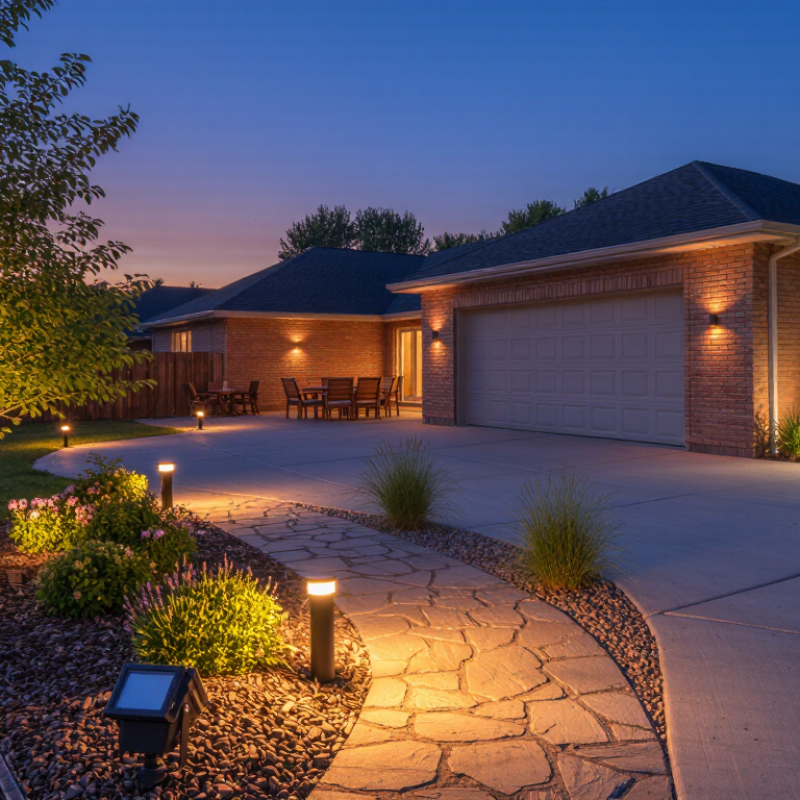
Understanding Landscape Lighting Fixtures and Their Roles
Landscape lighting fixtures do different jobs, so the best choice depends on what needs to be seen or felt. Path lights mark edges and steps, helping people move safely without flooding the yard with glare. Keep them low and spaced to avoid bright, distracting patches. A little darkness matters.
Spotlights direct narrow beams toward a tree trunk, textured stone, or a house feature. Aim carefully: light should reveal detail, not shine into windows or a neighbor’s eyes. Floodlights spread a wider wash across walls or open areas, but can make a small garden feel flat when overused. I find that one well-aimed beam often looks more natural than several competing ones.
Well lights sit flush with the ground and can uplight trees or walls where visible fixtures would interrupt the view. They need thoughtful placement because leaves and debris can collect around them. Deck and step lights provide close-range guidance along stairs, railings, and seating areas. Choose fixtures rated for outdoor exposure, and match brightness to the task. Warm-toned light usually feels gentler in planted spaces, though colors may look different under it. Test a fixture after dark before committing; daytime placement can be misleading.
Common Fixture Types for Paths, Gardens, and Outdoor Features
Path lights work best when they guide movement without shining into people’s eyes. Low bollards can mark a walkway’s edge, while shielded step lights help reveal changes in height. Space fixtures to create an even route, not a dotted runway. Too many lights can flatten the scene.
For gardens, adjustable spotlights can pick out a tree trunk, a clump of grasses, or a textured stone wall. Aim beams across surfaces to bring out leaves and bark, rather than pointing straight at them. Small well lights can sit near planting beds, but keep them clear of roots and places where water collects. I have found that young plants change shape quickly, so a fixed beam may need adjustment later.
Outdoor features call for different fixtures. Submersible lights are made for ponds and fountains, while narrow-beam spotlights can emphasize a sculpture or architectural detail. Check that each fixture is rated for its location and exposure to moisture. Warm, modest light often looks more natural than a bright white beam. Still, there is no perfect layout on paper; test a fixture after dark, then shift its angle if glare or harsh shadows appear.
What Types of Landscape Lighting Fixtures Are Best?
Typical light output by fixture type, shown as representative values in lumens.
Path and step lights provide low-level guidance, while spotlights and well lights highlight plants or outdoor features. Floodlights produce stronger, wider illumination. Actual output varies by fixture and application; choose brightness based on the area and desired effect.
How Beam Direction and Light Output Affect Performance
A fixture’s beam direction often matters more than its stated lumen output. A narrow spotlight can pick out a tree trunk, while a wide beam spreads light across a path or planting bed. Aim across textured bark to reveal ridges; aim directly at a window and the same beam can cause glare. Small shifts matter.
Lumens describe total visible light, not where it lands. For a walkway, use shielded path lights with modest output and downward-facing optics. For a wall or specimen tree, choose an adjustable spotlight and check its beam angle before installation. The Illuminating Engineering Society’s TM-15-20, the Technical Memorandum on outdoor luminaire classification, uses BUG ratings to assess backlight, uplight, and glare. These ratings help compare spill and glare potential, but they do not replace an on-site aiming check.
Efficiency matters too. The U.S. Department of Energy’s Energy Saver guidance reports that LEDs use up to 90% less energy than incandescent lamps. That does not mean the brightest fixture is the best choice. Start with a lower-output option, test it after dark, and adjust the angle before adding more fixtures. Aiming is rarely perfect at first. Wet leaves, pale paving, and nearby bedroom windows can change the result; sometimes a fixture still needs repositioning.
What Types of Landscape Lighting Fixtures Are Best? - How Beam Direction and Light Output Affect Performance
| Fixture Type | Typical Beam Direction | Typical Beam Spread | Approx. Light Output | Best Uses | Performance Considerations |
|---|---|---|---|---|---|
| Path light | Mostly downward and outward from a low-height fixture | Broad, usually about 90–120° | About 50–150 lumens | Walkways, garden edges, and low planting | A broad downward spread can mark a route without a strong glare point. Space fixtures to create overlapping pools rather than a runway effect. |
| Spotlight | Narrow, adjustable beam aimed upward or across a target | Narrow to medium, commonly about 15–60° | About 100–400 lumens | Trees, architectural details, statues, and focal points | A narrower beam concentrates light farther away; a wider beam covers more of a nearby subject. Aim carefully to limit glare and light spill. |
| Floodlight | Broad beam directed across an area, often from above or the side | Wide, often about 60–120° or more | About 300–1,000 lumens | Larger garden areas, entrances, and general outdoor visibility | Higher output and a wide beam cover more ground, but can cause glare or spill into neighboring areas if poorly aimed. |
| Well light | Upward from an in-ground housing | Varies by optic, commonly about 15–60° | About 100–500 lumens | Uplighting trees, columns, walls, and landscape features | A recessed installation keeps the fixture unobtrusive. Use a suitable outdoor-rated, drainable housing and avoid aiming directly into windows or eyes. |
| Wall-wash light | Wide, even beam directed across a vertical surface | Broad and diffuse; exact spread depends on the optic and setback | About 150–500 lumens | Fences, retaining walls, facades, and textured surfaces | Even spacing and correct distance from the surface help reduce bright spots and dark bands. More output is not necessarily better on a small wall. |
| Step light | Downward or outward from a stair riser, wall, or low mount | Controlled, typically broad enough to cover one or more treads | About 10–50 lumens | Stairs, changes in elevation, and deck edges | A shielded, low-output beam can improve visibility while minimizing direct glare. Place fixtures so the tread surfaces are lit consistently. |
| Bollard light | Downward or outward from a short vertical post | Broad, with spread shaped by the cap and shielding | About 100–500 lumens | Paths, driveways, and open landscape areas | The taller mounting height can spread light farther, but exposed sources may be uncomfortable to view. Shielding and spacing affect usable illumination. |
| Underwater light | Through water toward a pond feature, fountain, or pool interior | Narrow or broad, depending on the lens and target | About 100–500 lumens | Fountains, ponds, and suitable pool applications | Water depth, clarity, and surface movement affect perceived brightness. Use only fixtures rated for the intended submersion and installation conditions. |
Light-output and beam-spread figures are approximate examples, not fixed standards; actual performance varies with the fixture, optics, mounting height, aiming, and site conditions. Choose output for the task, then use beam direction and shielding to control where the light falls.
Choosing Fixtures for Different Landscape Needs
Choosing landscape fixtures starts with deciding what people need to see. For paths, shielded lights that direct beams downward can reveal edges without shining into eyes. Place them near turns and changes in level, rather than lining every foot of a walkway. At steps, compact riser lights help show each tread. Less is often enough.
Trees and garden beds need different light. Adjustable spotlights can bring out a tree’s bark or canopy, while wider beams suit low planting and textured stone. Aim carefully; light spilling into a neighbor’s window or across a bedroom can quickly become annoying. For patios, choose soft, low-glare fixtures that illuminate faces and tables without flattening the whole space. Test after dark. The effect may look different from the daytime plan.
Near ponds or sprinklers, use fixtures rated for the actual moisture exposure, and follow the manufacturer’s installation guidance. A qualified electrician can check wiring and connections, especially where cables run near water. A frequent planning mistake is choosing brightness before deciding where shadows should fall. Even a thoughtful layout can feel harsh, so adjusting angles after installation is a sensible part of the process.
Key Factors in Placement, Power, and Weather Resistance
Good landscape lighting starts with the task, not the fixture. Use shielded path lights to reveal steps and edges, then aim adjustable spotlights at trunks or textured walls. Keep beams below eye level and check them from the patio; glare often appears only when seated. Less can be better.
Power affects both operating cost and reliability. The U.S. Department of Energy’s Energy Saver guidance reports that LEDs use at least 75% less energy and can last up to 25 times longer than incandescent bulbs. For long garden runs, low-voltage systems can simplify installation, but voltage drop may dim distant fixtures. Size the transformer for the connected load, and allow some spare capacity. Small details matter.
Weather resistance needs equal attention. Look for a stated IP rating, not vague claims such as “all-weather.” In the IP code, the first digit describes protection against solids and the second against water; choose a rating suited to the fixture’s exposure and installation location. Check seals, cable entries, and corrosion-resistant finishes after wet seasons. A high rating helps, but it cannot correct poor drainage or a loose connection. I would also question whether every dark corner needs lighting; the answer is not always yes.
Related Posts
-
Envisioning Tomorrow: How Landscape Lighting Fixtures Will Transform Outdoor Spaces by 2030
-
Future Innovations in LED Landscape Lighting and Key Strategies for Global Procurement Success
-
LED Landscape Lighting Shines as Global Buyers Flock to the 137th Canton Fair in Guangzhou
-
2025 Trends in Best LED Landscape Lighting: A Comprehensive Comparison for Global Buyers
-
Uncompromising Quality of Best Led Landscape Lighting from Trusted Chinese Manufacturers
-
Innovative Solutions for Best Led Landscape Lighting Transforming Outdoor Spaces Worldwide