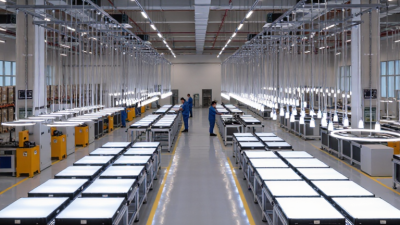
Who Are the Best LED Light Manufacturers in China?
Choosing among China’s leading LED light manufacturers takes more than comparing prices or product photos. A bright sample on a showroom counter can look impressive, yet reveal little about performance after months of daily use. Buyers should examine product specifications, quality-control processes, warranty terms, and the supplier’s experience with similar projects.
Lighting researcher Dr. Nadarajah Narendran has studied LED performance and lighting quality. A practical takeaway from his work, paraphrased rather than presented as a direct quotation, is that good lighting depends on more than brightness. That matters when comparing manufacturers. Check whether test reports identify the exact model, whether color consistency is documented, and whether production samples match the final order. Ask how the company handles heat management, component changes, and replacement parts. Small details count. A neatly labeled driver and a clear installation guide can signal a more disciplined process, though neither proves long-term reliability on its own.
There is no perfect shortlist. A factory may offer strong engineering but limited customization; another may respond quickly while providing thinner technical documentation. The best choice depends on the application, order size, and support needed after delivery. This guide explores how to assess China’s LED light manufacturers with practical criteria, so readers can compare claims against evidence and find a partner suited to their project.
What Defines a Leading LED Light Manufacturer in China?
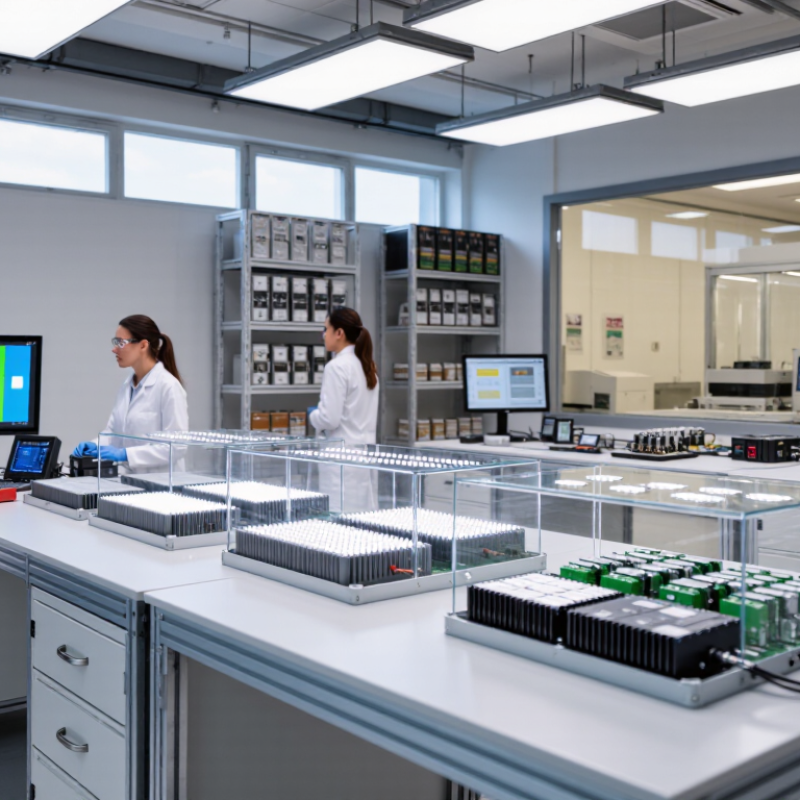
A leading LED light manufacturer in China does more than offer a wide catalogue. It can explain how its fixtures manage heat, maintain color consistency, and perform with different drivers. Ask for test reports that match the exact product configuration, not a similar model. Useful details include measured output, color temperature, color rendering, flicker behavior, and performance after extended operation. Details matter. A neat sample on a showroom shelf proves little about production consistency.
Look closely at quality controls. Can the factory trace LED bins and components by production batch? Does it inspect solder joints, test drivers, and record results before shipment? Request a sample, then check it in the intended installation; a high-bay fitting behaves differently in a warm warehouse than in a cool test room. Clear answers are a good sign, but independent verification still matters. Even experienced buyers can focus too much on price or impressive specifications. I would also examine warranty terms, replacement-part availability, and how the manufacturer handles a failed batch. No supplier is perfect. A reliable one acknowledges limits, explains corrective actions, and supports its claims with usable evidence.
How Is China’s LED Lighting Industry Structured?
China’s LED lighting industry is a layered supply network, not a single factory system. Upstream suppliers provide LED chips, drivers, lenses, circuit boards, and aluminum housings. These parts may come from different regions and companies. A small driver component can affect flicker, heat, and product life. Details matter.
Manufacturers sit in the middle. Some focus on finished fixtures, such as high-bay lights, panel lights, or outdoor luminaires. Others specialize in assembly, customization, or contract production. Their capabilities vary: one factory may excel at tooling, while another has stronger testing or export support. Buyers should check production samples, component traceability, and test records, not just catalog claims. A neat showroom tells only part of the story.
Downstream, distributors, project contractors, and retailers connect products with workplaces, roads, homes, and public buildings. This structure supports fast sourcing and flexible product changes, but it can make quality differences hard to spot. Specifications may shift between samples and bulk orders. That is worth questioning. Reliable suppliers explain tolerances, warranty terms, and quality checks in plain language. The industry is efficient, though not perfectly uniform; careful verification remains essential when comparing manufacturers.
Which Chinese LED Manufacturers Are Known for Different Product Categories?
China’s LED manufacturing base spans indoor, outdoor, automotive, horticultural, and display lighting. The best supplier depends on the product category and its testing needs. The IEA’s Energy Efficiency 2023 report estimated that LEDs accounted for about half of global lighting sales in 2022, up from roughly 5% in 2013. That shift rewards manufacturers with consistent components and dependable production, not just low prices.
For offices, shops, and homes, compare makers of downlights, panels, and linear fixtures. Check glare control, color consistency, driver quality, and dimming performance. Outdoor and industrial suppliers need strong heat management, sealed housings, and stable output in cold or wet conditions. Automotive and horticultural lighting demand tighter optical control and application-specific testing. Not every factory excels across all these areas.
The U.S. Department of Energy’s 2022 Solid-State Lighting R&D Opportunities report highlights efficacy, color quality, and product reliability as continuing development priorities. Ask suppliers for test reports tied to the exact fixture, not a similar model. A sample may look bright on a bench, yet perform differently after hours of heat buildup. That detail is easy to miss. Buyers should also verify production consistency across batches; public catalog specifications rarely tell the whole story.
Typical LED Product Efficacy Ranges
Indicative luminous efficacy ranges for common LED product categories manufactured in China
The bars show typical approximate ranges in lumens per watt (lm/W), not rankings or measured results for individual manufacturers. Actual efficacy varies with product design, components, color temperature, and test conditions; horticultural lighting is excluded because lumens are not a suitable measure of its useful output.
How Can Buyers Compare LED Manufacturers in China?
Comparing LED manufacturers in China requires more than checking price and catalogue wattage. The IEA’s 2023 Tracking Clean Energy Progress report estimated that LEDs made up about 50% of global lighting sales in 2022. That rapid shift makes consistency more important. Request test reports for the exact model, not a similar-looking sample. Check lumen output, input power, efficacy, color temperature, and color rendering. Small differences show up on a warehouse floor.
Look for LM-79 photometric test data and LM-80/TM-21 evidence for LED package maintenance claims. The U.S. Department of Energy’s CALiPER reports compare measured lighting performance with product claims; buyers should therefore verify figures independently.
Ask for a sample and run it for several hours. Check flicker, driver noise, heat near the housing, and color matching across units. Ask how failures are recorded and what replacement terms cover.
Delivery capacity matters, too: compare lead times for repeat orders, not just the first shipment.
I still find one part easy to miss: a polished report cannot prove every production batch will match. Request a batch inspection plan, and keep a signed sample for comparison.
What Should Buyers Check Before Selecting a Manufacturer?
Before choosing an LED manufacturer, define the fixture’s real conditions: operating hours, ambient temperature, dimming method, and required light level. The U.S. Department of Energy’s 2022 U.S. Lighting Market Characterization estimated that LEDs made up about 48% of installed U.S. lighting stock in 2020. A large market does not guarantee consistent quality. Ask for current test reports tied to the exact product model, not a similar-looking sample.
Check photometric and electrical results against IES LM-79, and request LM-80 data with TM-21 projections for LED package lumen maintenance. Compare efficacy, color temperature, color rendering, flicker, and power factor under stated test conditions. Numbers matter. Verify relevant safety and environmental certificates with the issuing laboratory or certification body. Then test a production sample at your intended dimming level; a showroom test alone may miss driver noise, color shifts, or excess heat.
Inspect the factory’s incoming-material checks, aging tests, and batch traceability. Ask how it handles component substitutions and failed units. Ask for traceability. Review warranty exclusions, spare-part availability, and lead times in writing. A polished audit can still miss a weak process, so compare records with sample measurements. One imperfect test result is not always a deal-breaker, but an unexplained gap deserves a clear answer.
Related Posts
-
China Top 10 LED Light Fixtures Manufacturers?
-
Understanding the Impact of LED Light Fixtures on Energy Efficiency and Sustainability
-
What is a LED Light? Understanding Types, Benefits, and Uses Explained
-

Top 10 LED Light Manufacturers for Global Buyers
-
Maximize Your Investment with 7 Essential Tips on Repair Costs and After Sales Support for Led Fixtures
-
Exploring Industry Trends for Led Light Bulbs at the 138th Canton Fair China 2025