7 Best Indoor LED Billboards for Global Buyers?
Choosing an Indoor Led Billboard for global use requires more than comparing screen size and pixel pitch. Buyers must examine brightness, viewing distance, refresh rate, cabinet depth, service access, and energy consumption. A bright showroom display may look impressive, yet create glare in a hotel lobby or airport corridor. Small details matter, including spare modules, front maintenance, cable routing, and reliable control software.
David Haynes, a veteran LED display consultant, once said, “The best LED display is the one that fits the audience, space, and message.” This principle guides our selection of seven leading Indoor Led Billboard solutions for international buyers. Each option is considered through practical criteria, including image consistency, color performance, installation flexibility, warranty support, and supplier communication. These factors can vary widely between regions.
Some buyers focus too heavily on low price. That can become expensive later. A cheaper cabinet may consume more power, require difficult rear access, or show visible color differences after months of operation. Not every product suits every venue. Honestly, no ranking can replace a site survey and a clear content plan.
This guide compares suitable models for retail stores, corporate receptions, control rooms, museums, broadcast studios, and large commercial interiors. It also considers global purchasing concerns, such as technical documentation, spare-parts availability, voltage compatibility, and after-sales response. The goal is practical guidance, not exaggerated promises. A dependable display should look convincing at close range and remain manageable after installation.
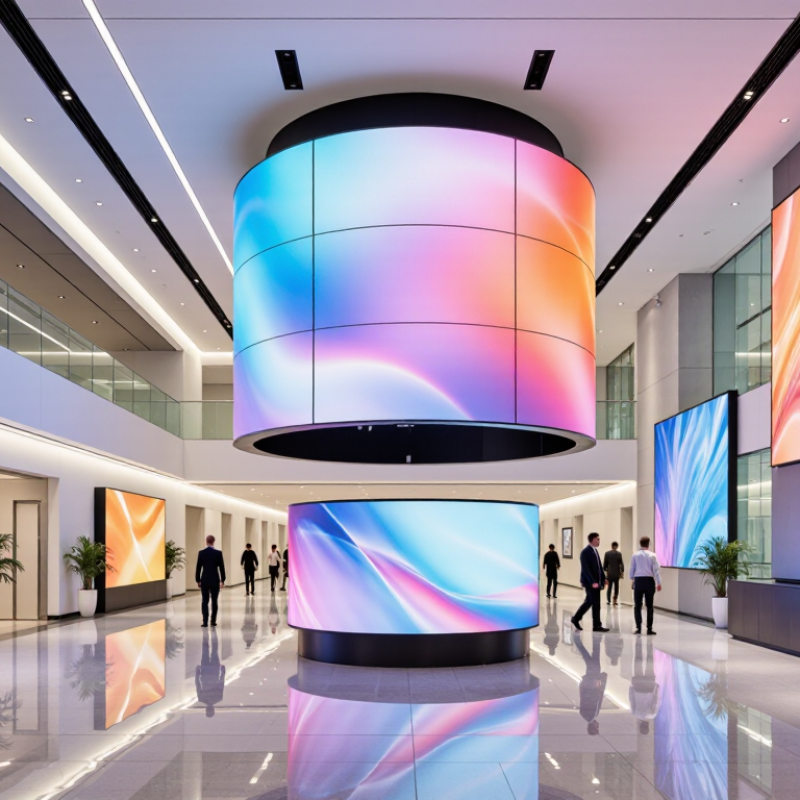
What Are Indoor LED Billboards and How Do They Work?
Indoor LED billboards are large digital displays built for controlled spaces such as malls, airports, exhibition halls, and retail interiors. They use many small light-emitting diodes to create images, videos, and animated text. Each LED module contains red, green, and blue diodes. Their combined light produces millions of visible colors.
An indoor LED billboard works through several connected components. A media player sends content to a controller. Receiving cards then distribute image data across individual cabinet modules. Power supplies convert electricity into the low-voltage current required by the LEDs. The controller also manages refresh rate, brightness, and image timing. Higher refresh rates usually produce smoother video and fewer camera scan lines.
Pixel pitch matters greatly. A 1.5-millimeter pitch suits close viewing, while a wider pitch may work from distant corridors. Brightness should remain comfortable indoors. Excessive brightness can cause eye strain and reduce color accuracy. During installation, technicians typically check cabinet alignment, ventilation, cable security, and dead pixels.
In practical projects, calibration often requires more patience than expected. Wall reflections can change how colors appear. Warm indoor lighting may make white content look yellow. Heat buildup can also shorten component life if airflow is restricted. Content should match the viewing distance and screen shape. Small text may look impressive on a computer but fail on a busy showroom wall. A slight color shift after months of use is possible, so inspection and recalibration should remain part of regular maintenance.
Key Specifications for Comparing Indoor LED Billboard Displays
7 Best Indoor LED Billboards for Global Buyers
Key Specifications for Comparing Indoor LED Billboard Displays
Pixel pitch should match viewing distance, not room prestige. A 1.2–1.5 mm pitch suits close viewing in retail spaces and reception areas. For larger halls, 2.5 mm can reduce cost without visibly weakening images. The International Telecommunication Union recommends considering viewing distance and visual acuity when assessing display quality. Brightness also matters. Indoor systems commonly operate around 800–1,500 nits, while darker venues may need less. Excessive brightness can cause eye strain and washed skin tones.
Refresh rate is critical for camera-friendly content. Choose at least 3,840 Hz for events, broadcasts, and recorded presentations. A higher rate does not automatically improve every image. Processing quality still matters. The Society of Motion Picture and Television Engineers emphasizes accurate timing and color reproduction in professional video environments. For color, request measured brightness, grayscale depth, and calibration records. A 16-bit processing path is preferable for smoother gradients, although specifications can be presented loosely.
Power consumption deserves closer attention. The U.S. Department of Energy reports that modern LED technologies can exceed 100 lumens per watt, but complete display efficiency is lower after processing and cooling. Ask for typical and maximum power figures. Check cabinet weight, front-service access, spare modules, and operating temperature. IP ratings may be less important indoors, but dust protection is not. One overlooked issue is acoustic noise. Cooling fans can disturb a quiet showroom. The cheapest panel may win on paper, yet installation labor and calibration often change the real cost.
7 Best Indoor LED Billboards for Global Buyers
Key specification comparison based on typical indoor LED display configurations. Pixel pitch is a practical indicator of image sharpness and recommended viewing distance: smaller values are generally better for close-range viewing.
These representative planning values cover common indoor applications. Buyers should also compare brightness, refresh rate, cabinet size, viewing angle, service access, power consumption, control-system compatibility, and local electrical requirements before selecting a display.
Seven Leading Indoor LED Billboard Options for Global Buyers
7 Best Indoor LED Billboards for Global Buyers
Seven Leading Indoor LED Billboard Options for Global Buyers
Global buyers can choose from seven practical indoor LED billboard types. Fine-pitch displays suit reception areas, retail walls, and control rooms. High-brightness models perform well near glass entrances and strong interior lighting. Modular cabinets simplify transport, installation, and future replacement. Curved screens create stronger visual impact in showrooms and event spaces. Transparent LED panels preserve window visibility while displaying scheduled content. All-in-one displays reduce setup time for smaller venues. COB LED screens offer a smooth surface and improved protection against handling damage.
Tips: Measure viewing distance before selecting pixel pitch. Ask for brightness control, spare modules, and service documentation. Confirm voltage, mounting standards, language support, and regional certification requirements. A local technician can reduce downtime. Do not ignore heat management.
In my experience, buyers often focus on screen size and overlook maintenance access. That mistake becomes expensive. Check cabinet weight, front-service design, refresh rate, and color consistency under real lighting. For close viewing, a smaller pixel pitch usually produces cleaner text. For distant audiences, excessive resolution may waste budget. Content compatibility also matters, especially when several input sources are used. Request demonstration footage, test gradients, and inspect black levels before purchase. Specifications can look perfect on paper. Real rooms are less forgiving. Allow room for revisions, because the first layout may not fit the space as expected.
Installation, Maintenance, and Content Management Considerations
Installation is where many indoor LED projects quietly lose money. Measure viewing distance, ceiling height, access routes, and electrical capacity before selecting a cabinet. A 2.5-metre screen may look impressive, yet fail in a narrow lobby. Use front-service modules when rear access is restricted. Reserve ventilation space around processors and power supplies. Small mistakes become expensive later.
The U.S. Department of Energy reports that quality LED products can reach approximately 50,000 hours, but heat strongly affects useful life. Keep ambient temperature stable and record module temperatures during commissioning. Schedule visual inspections monthly and electrical checks quarterly. Clean dust from ventilation paths with approved equipment, not aggressive compressed air. Keep spare modules, receiving cards, cables, and power supplies on site. Still, no maintenance plan is perfect. Human error remains a serious variable.
Content management needs equal attention. A global buyer should require role-based access, encrypted connections, playback logs, and remote health alerts. The Digital Signage Federation emphasizes reliable scheduling, proof of playback, and clear ownership in professional deployments. Content should match local language, viewing distance, and cultural expectations. Use high-contrast layouts, readable typography, and short motion sequences. Test files on the actual display before publishing. A beautiful campaign can still fail if it loads slowly, crops text, or plays at the wrong time. Keep an offline fallback playlist for network interruptions. It feels old-fashioned, but it works.
How to Choose the Right Indoor LED Billboard for Your Market
Choosing the right indoor LED billboard starts with the market, not the screen size. A shopping mall in London may need a different solution than a transport hub in Dubai or a hotel in Singapore. Measure the viewing distance, ceiling height, ambient light, and available wall space. Measure twice.
Pixel pitch controls image sharpness. For viewers standing within three meters, a fine pixel pitch usually produces cleaner text and faces. Larger pitches can work for distant audiences and reduce investment. Do not judge quality from showroom footage alone. Request real content tests with small fonts, skin tones, and fast motion.
Brightness should suit the room, not overpower it. Excessive brightness can cause glare and make premium spaces feel uncomfortable. Ask about automatic brightness control and front or rear maintenance access. These details affect daily operation more than impressive specifications. Refresh rate also matters when cameras record the display. Low performance may create visible lines or flicker.
Reliable purchasing requires more than comparing prices. Check power consumption, spare-part availability, installation support, warranty terms, and response times across your region. Confirm electrical certifications and local installation requirements before payment. A technically strong display may still become expensive if service takes weeks.
I once underestimated access space during a retail installation. The screen performed well, but maintenance became awkward. That mistake changed my checklist. Ask for drawings, sample cabinets, and a complete commissioning plan. Test it locally. Language, viewing habits, content styles, and venue rules can all influence the best indoor LED billboard for your market.