What Is the Best Foot Scrub in 2026?
Choosing the best Foot Scrub in 2026 is less about finding the roughest formula and more about matching a product to your skin and routine. A scrub that feels satisfying on thick heel skin may irritate delicate areas or leave sensitive skin uncomfortable. The right choice should exfoliate gently, rinse cleanly, and fit how often you plan to use it.
This guide compares foot scrubs by practical details: exfoliating particles, texture, moisturizing ingredients, fragrance, packaging, and value. A few grains on wet heels can feel very different from a dense, gritty paste worked across dry skin. We’ll also consider whether a product gives clear directions and makes its ingredients easy to understand. Small details matter. A slippery tub-side bottle, for example, may be less convenient than a squeeze tube with a secure cap.
There isn’t one perfect option for everyone. Skin type, personal preferences, and the condition of your feet all affect what feels comfortable. More scrubbing does not necessarily mean better results, and rough or painful skin deserves care rather than force. That distinction can be easy to miss. The comparisons ahead aim to separate useful features from marketing claims, while recognizing that individual experiences vary. If irritation persists or a foot problem concerns you, a qualified healthcare professional can offer advice suited to your situation.
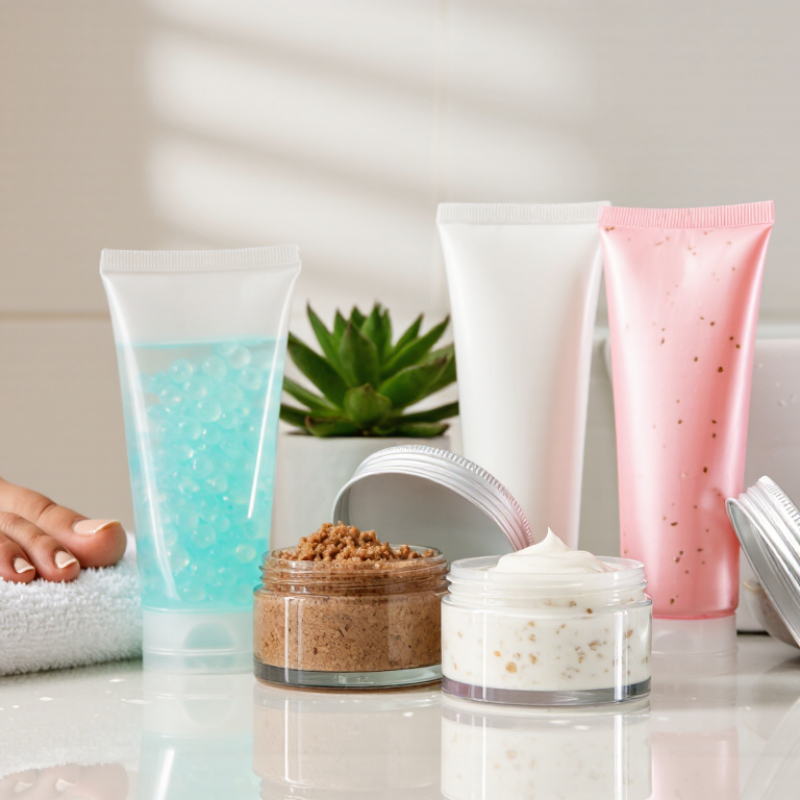
What a Foot Scrub Is and How It Exfoliates Skin
A foot scrub is a topical exfoliant: it loosens or removes some dead cells from the outer skin layer. Many formulas use fine particles, such as salt or pumice, which work through gentle friction. Others use exfoliating acids to loosen the bonds between surface cells. The heel’s rough, thickened skin can feel like dry paper under a fingertip, but scrubbing harder is not necessarily better. Too much friction may leave skin sore or irritated. That matters.
The American Academy of Dermatology Association estimates that about 1 in 10 people in the United States has atopic dermatitis, a condition that can make skin more sensitive. This is one reason to patch-test a new scrub and use light pressure on damp skin. Avoid scrubbing cracked, inflamed, or painful areas; people with diabetes or reduced foot sensation should ask a healthcare professional before exfoliating. A scrub can smooth roughness, but it cannot treat the cause of every foot problem. I’d also be cautious about promising perfectly soft heels after one use. Skin varies, and sometimes a gentle wash and moisturizer are the less exciting, safer choice. Sources: American Academy of Dermatology Association, “Atopic dermatitis”; American Academy of Dermatology, “How to safely exfoliate at home.”
What Is the Best Foot Scrub in 2026? — What a Foot Scrub Is and How It Exfoliates Skin
A foot scrub is a product or tool that uses friction to loosen and remove some dead cells from the skin’s outermost layer. The best option depends on skin sensitivity, the area being treated, and how gently it is used.
| Foot-scrub type | Common exfoliant | How it exfoliates | May suit | Points to consider |
| Sugar-based scrub | Sugar crystals | Crystals create friction that helps lift loose surface flakes as the product is massaged over wet skin. | People seeking a manual scrub for intact, dry-feeling skin. | Use light pressure; stop if skin becomes sore or irritated. Avoid broken or cracked skin. |
| Salt-based scrub | Salt crystals | Solid crystals mechanically loosen some dead surface cells through rubbing. | People who prefer a granular scrub on unaffected skin. | Salt can sting cuts, fissures, or irritated areas. Avoid vigorous rubbing. |
| Pumice stone | Porous volcanic rock; a tool rather than a scrub formula | Gentle rubbing against damp, thickened skin helps wear away surface buildup. | Small areas of rough skin, such as thickened skin on the heel. | Use gently and keep the stone clean and dry between uses. Do not use on sores or sensitive skin. |
| Fine-particle scrub | Small, smooth exfoliating particles | Fine particles provide physical friction; the amount of exfoliation depends on particle shape, pressure, and rubbing time. | People who want a less coarse-feeling manual scrub. | “Fine” does not guarantee suitability for sensitive skin; check the ingredient list and discontinue if irritation occurs. |
| Chemical exfoliant foot product | Depending on the formula, alpha hydroxy acids such as lactic acid or urea | These ingredients help loosen the bonds between surface cells or soften thickened skin; they do not exfoliate by scrubbing particles. | People considering a non-granular approach for rough or thickened skin. | Follow the product directions. Some formulas may irritate skin; avoid applying to damaged skin unless directed by a healthcare professional. |
Practical guidance: Start gently and follow the product label rather than relying on a fixed schedule. Moisturize afterward. Do not scrub open cracks, wounds, inflamed skin, or areas with reduced sensation. People with diabetes, poor circulation, or reduced foot sensation should consult a healthcare professional before exfoliating their feet.
Common Foot Scrub Types and Their Key Ingredients
What Is the Best Foot Scrub in 2026?
Common Foot Scrub Types and Their Key Ingredients
The best scrub depends on what your feet need, not how rough it feels. Physical scrubs use pumice, salt, or sugar to loosen flaky skin through friction. A gritty scrub can feel satisfying, but that sensation does not prove it exfoliates better. Chemical formulas may use lactic or glycolic acid to soften rough patches; salicylic acid can help lift thickened skin. For dry heels, urea and glycerin add moisture, while urea can also soften hardened skin. A 2013 review in Dermatology Research and Practice describes urea’s moisturizing and skin-softening roles. The choice matters.
Industry context helps explain the variety: Grand View Research estimated the global foot-care products market at USD 3.11 billion in 2023. That figure covers more than scrubs, so it is not evidence that one ingredient works best. Check the label and choose a formula suited to your skin. Avoid abrasive scrubbing over cracks, redness, or irritated areas.
Tips: Use a scrub gently on damp feet, then rinse and apply moisturizer. Start once weekly; more is not always better. If you have diabetes, reduced circulation, or persistent heel cracks, ask a healthcare professional before exfoliating. Even gentle routines can irritate skin, and it is worth adjusting when that happens.
How to Choose a Foot Scrub for Your Skin and Needs
The best foot scrub depends on what your skin can tolerate, not how rough your heels feel. For mild dryness, look for fine, smooth particles and a moisturizing base. Coarse grains may feel satisfying, but they can leave sensitive skin sore or irritated. If fragrance often bothers you, choose an unscented formula and check the ingredient list for known triggers.
For thick, rough patches, a scrub with gentle exfoliating ingredients may help, but avoid scrubbing hard or trying to remove all the roughness at once. Use it on damp feet with light pressure, especially around the heels. Less can be enough. Start once a week, then adjust if your skin stays comfortable. Rinse well and apply moisturizer afterward; the softened skin can feel tight again without it. Stop if it stings or becomes red. Skip scrubs on cuts, blisters, or cracked skin. If you have diabetes, reduced sensation, or circulation problems, ask a healthcare professional before exfoliating. One detail is easy to overlook: a product that works on your heels may be too harsh for the tops of your feet.
How to Use a Foot Scrub Safely and Effectively
A foot scrub works best as gentle maintenance, not a contest to remove every rough patch. Wash your feet with lukewarm water, then use a soft scrub on intact skin with light, circular pressure. Keep the session brief. Rinse well and pat dry, especially between the toes. A rough heel may need care, but cracked skin, blisters, or open cuts need a pause—not more friction. Less is safer. Start once a week and adjust only if your skin stays comfortable; redness, burning, or tenderness means stop. Apply a fragrance-free moisturizer afterward, avoiding the spaces between your toes.
Extra caution matters for people with diabetes or reduced sensation. The CDC’s National Diabetes Statistics Report, 2024, estimated that 38.4 million people in the United States had diabetes in 2021. Numbness can make it harder to notice scrapes or excess pressure, so ask a healthcare professional before using abrasive tools on your feet. The American Academy of Dermatology also recommends gentle care for rough skin and moisturizing after bathing. Skip scrubs over corns, fissures, or irritated areas, and do not use sharp blades to speed things up. It can be tempting to keep scrubbing until the skin feels perfectly smooth; that feeling is not a reliable measure of safety.
How to Compare Foot Scrubs in 2026
What Is the Best Foot Scrub in 2026?
How to Compare Foot Scrubs in 2026
Compare the scrub’s texture, exfoliating ingredients, and instructions—not just its “deep smoothing” claims. Fine particles may feel gentler than coarse grains, but pressure and frequency matter too. A useful test: apply a small amount to damp skin, then rinse without scrubbing hard. Stop if skin stings or turns red. Small details count.
Check whether exfoliation comes from physical grains, acids such as lactic acid, or both. The FDA requires cosmetic ingredients to appear in descending order of predominance, though the list does not disclose exact percentages. Look for clear directions and avoid combining a scrub with other strong exfoliants on the same area. Fragrance may also bother sensitive skin. There is no single best formula for every heel.
Skin health should guide the choice. The CDC’s 2024 National Diabetes Statistics Report estimated that 38.4 million people in the United States had diabetes in 2021. Diabetes can affect foot sensation and healing, so people with diabetes should ask a clinician before using abrasive products. For everyone, skip scrubs on cracked, inflamed, or injured skin. A softer routine may take longer. That trade-off is easy to underestimate.