What Are the Benefits and Risks of Lithium Batteries?
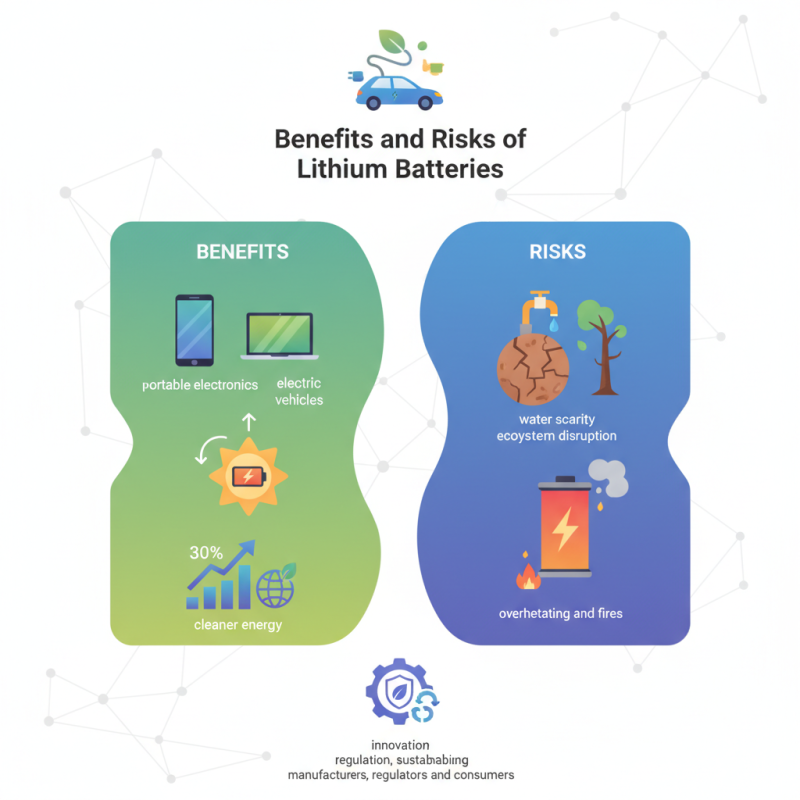
Lithium Batteries have become essential in today's technology-driven world. Their lightweight design and high energy density make them ideal for portable electronics and electric vehicles. According to a report by the International Energy Agency, lithium battery production is projected to increase by 30% annually through 2030. This growth is driven by rising demand for renewable energy storage solutions.
However, reliance on lithium batteries carries both benefits and risks. Experts like Dr. Emily Zhao emphasize, "While lithium batteries enable a cleaner energy future, we must address their environmental impact." The extraction and processing of lithium can lead to water scarcity and ecosystem disruption. Moreover, safety concerns arise from potential overheating and fires, particularly in low-quality batteries.
These challenges call for innovation and regulation. The industry must balance performance with sustainability. As we navigate the future of lithium batteries, it's critical to reflect on how to mitigate these risks while maximizing their advantages. The journey toward greener technology is complex, requiring collaboration among manufacturers, regulators, and consumers.
Benefits of Lithium Batteries in Modern Technology
Lithium batteries have revolutionized modern technology. They offer high energy density, allowing devices to run longer. This is especially crucial for smartphones and laptops. With rapid charging capabilities, users can quickly power up their devices. Some batteries can reach a full charge in under an hour. This time efficiency is a significant improvement over traditional batteries.
In electric vehicles, lithium batteries contribute to better performance and range. Many people appreciate the reduced weight, enhancing speed and efficiency. However, the environmental impact of lithium mining raises concerns. The extraction process can harm local ecosystems. Moreover, batteries have a limited lifespan and their disposal poses challenges.
Innovations continue to emerge, aiming to address these issues. Researchers are exploring recycling methods and alternative materials. As technology advances, the quest for sustainable solutions will be paramount. Users must stay informed about both the benefits and the limitations of lithium batteries.
Environmental Impact of Lithium Battery Production
The production of lithium batteries has significant environmental consequences. Mining lithium requires vast amounts of water and can deplete local resources. In regions like South America, this mining impacts agriculture and local communities. Chemical processes involved in extracting lithium can also lead to soil and water contamination.
Battery production itself emits greenhouse gases. Factories often rely on fossil fuels, contributing to air pollution. The carbon footprint of a lithium battery is substantial, raising concerns about climate change. Proper waste management is also a challenge. Disposing of batteries can lead to hazardous materials entering ecosystems.
Even recycling methods are not foolproof. Improper handling can release toxins into the environment. There are calls for better regulations and sustainable practices. Society must balance the benefits of lithium batteries with these serious impacts. The question remains: are we doing enough to protect our planet?
Safety Risks Associated with Lithium Battery Usage
Lithium batteries are widely used due to their efficiency and longevity. However, safety risks cannot be ignored. According to a study by the National Fire Protection Association, lithium-ion batteries are involved in 44% of all battery-related fires. These incidents can lead to significant damage and injury.
Overcharging is a major risk factor. When batteries are charged beyond their limits, they can overheat. This overheating can cause thermal runaway, resulting in fires or explosions. A report by the U.S. Consumer Product Safety Commission noted over 1,500 incidents related to lithium battery malfunctions over the past decade.
Improper disposal also presents dangers. When lithium batteries are not recycled or discarded correctly, they can leak harmful chemicals into the environment. In fact, research indicates that only 5% of lithium batteries are recycled, meaning many end up in landfills. The consequences of improper disposal can be severe, affecting soil and water quality significantly. Awareness of these risks is essential for the safe use of lithium batteries.
Benefits and Risks of Lithium Batteries
This chart illustrates the benefits and risks associated with lithium batteries. The benefits such as energy density, charge time, and lifespan are rated higher, whereas risks like fire risk and environmental impact have lower ratings.
Lifecycle Analysis of Lithium Batteries: Production to Disposal
The lifecycle analysis of lithium batteries reveals important insights from production to disposal stages. The extraction of lithium itself is intensive. It uses vast amounts of water, especially in arid regions. Reports indicate that producing one ton of lithium can consume around 2 million liters of water. This leaves significant ecological footprints and raises sustainability concerns.
During production, energy-intensive processes release greenhouse gases. A study from the International Energy Agency states that lithium battery production emits approximately 20 to 30% of total lifecycle emissions. This is troubling, especially as global demand grows. Such emissions challenge the narrative of lithium batteries being green solutions.
When lithium batteries reach the end of their life, disposal methods vary. Many batteries end up in landfills, where they pose risks. They can leak harmful substances into the soil and water. Recycling rates remain low; only 5% of lithium batteries are recycled at present. Efforts to improve recycling processes are essential but still face technical and economic hurdles.
Comparative Overview of Lithium Batteries and Other Energy Sources
Lithium batteries have gained popularity for their lightweight design and high energy density. They offer a significant advantage over traditional lead-acid batteries. For example, lithium batteries charge faster and last longer. However, they can be more expensive initially. The price may discourage some users despite the long-term savings.
When comparing lithium batteries to other energy sources, safety is a serious concern. Lithium batteries can overheat and pose a fire risk if not handled properly. On the other hand, renewable energy sources, like solar, have minimal risk in this regard. Yet, solar energy requires a reliable storage solution. Scaling up these technologies can be slow and costly.
Another factor is environmental impact. Lithium mining raises ethical questions. Local ecosystems can suffer during extraction. Conversely, coal-based power can lead to significant air pollution. Each source has trade-offs that require careful consideration. Making informed choices is essential for future energy sustainability.
What Are the Benefits and Risks of Lithium Batteries? - Comparative Overview of Lithium Batteries and Other Energy Sources
| Dimension | Lithium Batteries | Lead-Acid Batteries | Nickel-Cadmium Batteries | Gas Generators |
| Energy Density (Wh/kg) | 150-200 | 30-50 | 40-60 | 300-600 |
| Cycle Life (Cycles) | 2000-5000 | 500-1000 | 1500-2000 | Limited by fuel |
| Charge Time | 1-3 hours | 8-12 hours | 1-2 hours | N/A |
| Environmental Impact | Recyclable, Low emissions | Toxic waste, Limited recycling | Toxic waste, Limited recycling | High emissions |
| Cost (USD/kWh) | 400-700 | 150-200 | 300-500 | 100-250 |