
Who Are the 7 Best Clear PVC Film Manufacturers?
Clear Pvc Film is used in packaging, protective covers, stationery, and many other everyday products. Yet films that look similar on a sample card can behave differently on a production line. Thickness, clarity, flexibility, surface finish, and roll consistency all matter. So does the manufacturer’s ability to explain its specifications clearly.
This guide introduces seven manufacturers worth considering when sourcing clear PVC film. The aim is not to treat one supplier as the right choice for every buyer. A packaging converter may prioritize stable unwinding and sealing performance, while a fabricator may need a softer film that bends without clouding. Small details count. A slightly uneven roll can slow work and create waste.
The companies are considered through practical factors such as product range, customization options, quality controls, technical support, and communication. Public product information can help narrow a shortlist, but it cannot replace a sample review or a direct conversation. Ask for relevant specifications, confirm how thickness is measured, and check whether the supplied grade suits your process. These steps take time.
No shortlist is perfect. Product lines and service levels can change, and a manufacturer that fits one application may not fit another. Use the profiles below as a starting point, then verify current capabilities with each supplier before making a purchasing decision.
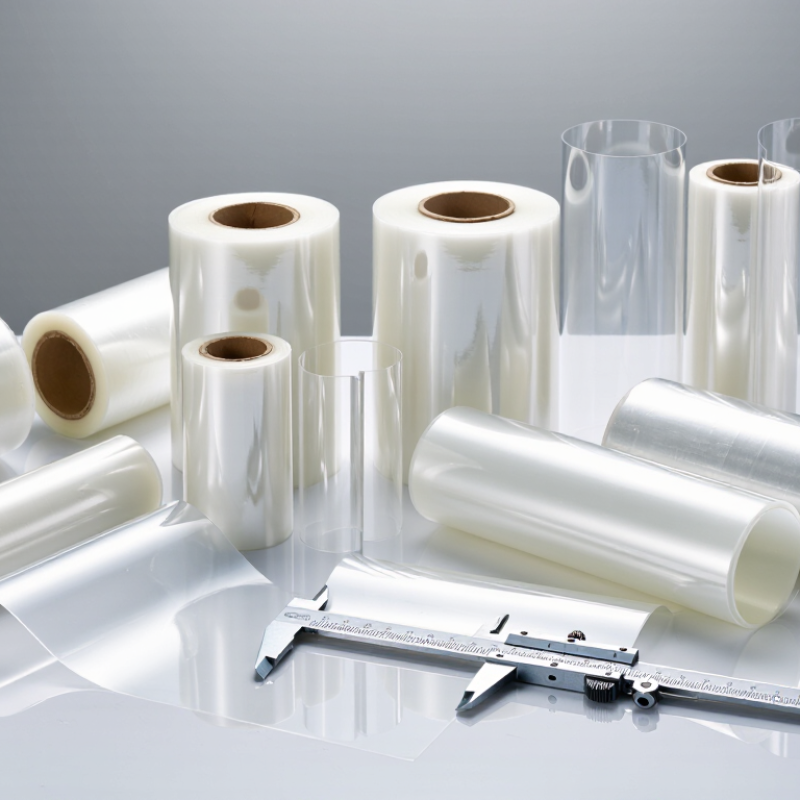
What Clear PVC Film Is and How It Is Made
Clear PVC film is a transparent, flexible sheet made from polyvinyl chloride resin and carefully selected additives. It is used for packaging, protective covers, and flexible windows, where visibility and bendability matter. The formulation is not just resin. Plasticizers help control softness, while heat stabilizers and processing aids support consistent production. Too much plasticizer can affect stiffness and surface feel; too little may leave the film harder than intended.
Manufacturers commonly form clear PVC film by calendering or extrusion. In calendering, heated material passes through a series of rollers, which press it into a thin, even sheet. Extrusion pushes softened material through a flat die, then cools and winds the film. Clean rollers, steady temperature, and controlled cooling help limit streaks, bubbles, and uneven thickness. Small process changes can still affect clarity. That deserves attention.
Scale matters, but it does not guarantee quality. Plastics Europe’s Plastics—the Fast Facts 2024 reports that global plastics production reached 413.8 million tonnes in 2023, showing the size of the broader materials industry. That figure covers many polymers, not clear PVC film alone. Buyers should therefore ask for film-specific data, such as thickness tolerance, light transmission, and haze measurements. A sample viewed under workshop lighting may look clear, yet reveal flaws against a bright window. Testing in the intended setting is more dependable.

Criteria for Evaluating Clear PVC Film Manufacturers
A reliable assessment starts with the film itself. Ask manufacturers for a stated thickness range, not just a nominal figure. Compare clear samples under the same light; haze, tint, and tiny inclusions become easier to spot. Check several points across each roll. Small variations matter. For packaging or protective covers, a few microns may affect sealing, folding, or fit.
Manufacturing controls deserve equal attention. Request batch records, inspection methods, and details on how defects are handled. A capable supplier should explain resin selection, plasticizer choices, surface finish, and whether the film suits indoor or outdoor use. Ask for test data relevant to your application, such as tensile performance, light transmission, or weathering results. Numbers without context mislead.
Service and consistency matter too. Review sample-to-production consistency, minimum order quantities, lead times, and packaging that protects roll edges. Describe the actual use case: temperature changes, contact with inks, or repeated bending may alter your requirements. Price can distract. I would not judge a manufacturer from one polished sample alone; request another production lot and inspect it with a simple checklist. No checklist removes every uncertainty.
Profiles of Seven Leading Clear PVC Film Manufacturers
Profiles of seven leading clear PVC film manufacturers are best judged by measurable capabilities, not polished catalogs. Compare producers of calendered general-purpose film, high-clarity cast film, rigid protective sheet, flexible packaging film, printed decorative film, lamination film, and custom-thickness grades. These categories reveal different priorities: a display cover needs low haze, while a packaging web needs steady gauge and reliable sealing. Ask for sample rolls and test records.
PlasticsEurope’s Plastics – the Fast Facts 2024 reports global plastics production of 413.8 million tonnes in 2023. This is broad plastics data, not a PVC-film market estimate, but it shows the scale of the materials sector. For each manufacturer profile, check thickness tolerance, clarity, surface finish, processing method, and batch-to-batch consistency. Request haze and tensile results, then inspect a real roll under angled light. Small defects show up fast. A supplier’s published range can look impressive; actual performance may still vary.
Tips: Compare like with like. Specify thickness, intended process, and acceptance limits before requesting quotes; otherwise, low prices may reflect different grades rather than better value.
How the Manufacturers’ Products and Capabilities Compare
Clear PVC film suppliers differ less by brochure claims than by the details they can control: thickness consistency, optical clarity, flexibility, and roll quality. PlasticsEurope’s Plastics—The Fast Facts 2023 reports global plastics production of 400.3 million tonnes in 2022. That scale makes supplier capability important, but it does not prove that any particular film is suitable for a given use. Ask for production tolerances and recent test results, not just a polished sample.
For a fair comparison, request haze and light-transmission measurements using ASTM D1003, plus tensile data tested under ASTM D882. Check whether the supplier offers custom widths, stable thickness across the roll, and formulations suited to the intended temperature and handling conditions. A glossy sample can mislead. Edge curl, small gels, or uneven winding may only show up after converting. Still, numbers matter.
The strongest manufacturers usually pair process control with practical support: clear specifications, traceable batches, and prompt investigation of defects. Some excel at high-volume standard rolls; others are more flexible with short runs, color matching, or custom gauges. Compare lead times and minimum order quantities alongside price. One weakness in many comparisons is the reliance on a single sample; it may not represent routine production. Ask for data from multiple batches, and check whether the reported results match your own testing conditions.
Who Are the 7 Best Clear PVC Film Manufacturers?
How Products and Capabilities Compare: Representative Clear PVC Film Thickness Options
These are representative nominal gauges, not manufacturer-specific product claims or a ranking. When comparing suppliers, confirm available thicknesses, tolerances, clarity, and technical specifications on current product datasheets.
How to Choose a Manufacturer for Your Application
Choosing a clear PVC film manufacturer starts with the job the film must do. Packaging, protective covers, and formed components need different thicknesses, flexibility, and optical clarity. Grand View Research estimated the global PVC market at about $64.2 billion in 2023, with projected growth through 2030. That scale signals a mature supply chain, not uniform product quality. Small details matter.
Share your operating conditions with potential suppliers: contact surfaces, forming temperature, outdoor exposure, and expected service life. Ask for a thickness tolerance, haze and light-transmission results, and tensile data. ASTM D1003 covers haze and luminous transmittance; ASTM D882 measures tensile properties of thin plastic sheeting. Request test methods and recent batch records, not just a polished sample. A sample should also run through your actual cutting, welding, or forming process.
Check how the manufacturer controls plasticizer selection, color consistency, and roll-to-roll variation. For outdoor use, request evidence of weathering performance; for close-contact uses, clarify applicable material and migration requirements. Ask how defects are handled and whether production lots are traceable. A low quote may hide inconsistent gauges or limited technical support. I would still verify the supplier’s claims independently; a tidy specification sheet cannot show how a full production roll behaves.
Who Are the 7 Best Clear PVC Film Manufacturers? - How to Choose a Manufacturer for Your Application
The profiles below are supplier-selection archetypes, not named companies or verified rankings. Actual product specifications and capabilities vary by manufacturer; request current technical data and samples before choosing.
| Supplier profile | Typical strengths | Potential applications | What to confirm | Best fit when… |
|---|---|---|---|---|
| 1. Calendered-film specialist | Continuous roll production; options for flexible, clear PVC film and different surface finishes. | Protective covers, flexible curtains, packaging, and general-purpose sheet applications. | Gauge tolerance, width, roll length, clarity, surface finish, and winding quality. | You need standard roll goods or repeatable production volumes. |
| 2. Custom-compounding manufacturer | Can tailor formulation properties such as flexibility, clarity, and selected additive packages. | Applications with defined handling, flexibility, or product-contact requirements. | Plasticizer and additive disclosures where applicable, regulatory documentation, and formulation-change controls. | A standard grade does not meet the application’s documented requirements. |
| 3. Packaging-film producer | Focus on consistent rolls, converting compatibility, and packaging-related quality controls. | Blister packaging, protective packaging, and clear packaging components where PVC is specified. | Applicable food-contact or other regulatory declarations, sealability if required, and traceability. | The film will be converted, sealed, or used in a regulated packaging application. |
| 4. Industrial-grade film supplier | Offers grades selected for practical durability, handling, and production use. | Machine guards, workshop curtains, equipment covers, and general industrial barriers. | Relevant mechanical test results, temperature limits, chemical compatibility, and intended-use guidance. | The film must withstand regular handling or a defined workplace environment. |
| 5. Specialty clear-film converter | Can supply converted formats such as cut sheets, slit rolls, or customized packaging formats. | Displays, fabrication, small-batch packaging, and applications needing specific dimensions. | Cutting tolerances, edge quality, protective interleaving, minimum order quantities, and packaging method. | Ready-to-use sizes or secondary converting are more important than buying master rolls. |
| 6. High-clarity film producer | Emphasizes visual appearance, transparency, and control of visible surface defects. | Clear windows, presentation covers, viewing panels, and display-related uses. | Haze and light-transmission test methods, defect limits, and sample approval procedures. | Visual clarity is a key acceptance criterion for the finished product. |
| 7. Sustainability- and compliance-focused supplier | Provides documentation and material information to support purchasing and compliance reviews. | Projects with specified substance restrictions, customer standards, or documented material policies. | Current declarations, test reports, recycled-content claims if applicable, and change-notification practices. | Documented material compliance is part of supplier approval. |
Before placing an order, compare the same specification across suppliers: thickness and tolerance, usable width, clarity, flexibility, test methods, applicable compliance documents, lead time, minimum order quantity, and sample performance in your process.
