What Are the 2026 Top Ceiling Lights for Global Buyers?

As global buyers prepare for 2026 projects, Ceiling Lights are becoming more than simple overhead fixtures. They shape brightness, comfort, energy use, and the visual character of homes, hotels, offices, and retail spaces. A successful choice must balance design with measurable performance. Buyers should examine lumen output, color temperature, beam angle, dimming compatibility, material quality, and expected service life. These details matter under real conditions. A warm 3000K fixture can soften a restaurant, while a neutral 4000K model may support focused office work. The wrong selection can create glare, shadows, or an uncomfortable atmosphere.

This guide explores the top Ceiling Lights attracting attention from international buyers in 2026. It considers slim LED panels, smart flush mounts, decorative pendant systems, track-inspired ceiling fixtures, and efficient commercial solutions. The discussion also reviews installation methods, driver reliability, warranty terms, packaging, and supplier communication. Experienced buyers know that attractive product photos are not enough. Sample testing remains essential. So does checking certifications for the target market. Not every “energy-saving” claim is equally convincing. Some specifications may look impressive but provide little practical value. That deserves careful questioning. We will compare products through both design appeal and purchasing practicality. The best fixture is not always the brightest or cheapest. It should suit the room, comply with local requirements, and remain dependable after repeated daily use. Small details often decide the final result.
What Are the 2026 Top Ceiling Lights for Global Buyers?

2026 Ceiling Light Market Trends and Global Buyer Needs

What Are the 2026 Top Ceiling Lights for Global Buyers?

2026 Ceiling Light Market Trends and Global Buyer Needs

In 2026, global buyers are prioritizing efficient ceiling lights with flexible, human-centered performance. Energy-saving LEDs remain standard, but efficiency alone no longer wins projects. Buyers now examine light quality, glare control, lifespan, and maintenance access. A soft 3000K setting suits hospitality areas, while adjustable color temperatures support offices and retail spaces. Dimming matters too.

Smart controls are becoming practical rather than decorative. Ceiling lights may connect with occupancy sensors, daylight systems, or building management platforms. However, compatibility problems still appear during installation. Procurement teams should request wiring diagrams, control protocols, and sample testing before placing large orders. Wireless options can reduce cabling, but battery replacement needs careful planning.

Global buyers also need reliable documentation. Product files should include photometric data, electrical ratings, safety testing, and regional compliance information. For humid rooms, appropriate ingress protection can reduce long-term failures. In coastal markets, corrosion-resistant materials deserve closer attention. A five-year warranty sounds useful, but response times and spare-part availability matter more.

Design trends are moving toward slim profiles, recycled materials, and discreet trim. Yet ultra-thin products can limit heat management. This is an area worth questioning. A lower price may hide higher replacement costs. Buyers should compare total ownership expenses, installation labor, packaging damage, and after-sales support. Small pilot orders can reveal weaknesses before a full rollout.

Key Types of Ceiling Lights Available in 2026

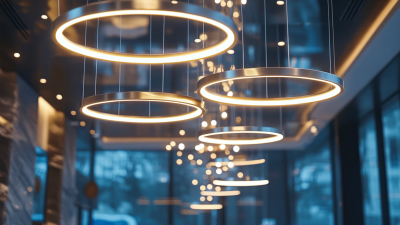
Global buyers in 2026 are comparing ceiling-light types more carefully than decorative finishes. Recessed downlights suit clean ceilings and focused task lighting. Flush-mount fixtures work better in low rooms, corridors, and rental apartments. Pendant lights add visual depth above dining tables or reception desks. Track lights remain practical for retail displays because each head can be redirected. I have found that beam angle matters more than catalogue brightness.

Smart ceiling lights are also expanding beyond simple on-and-off control. They can adjust brightness, color temperature, occupancy response, and scheduling. However, connectivity is not always an advantage. A poor wireless signal can frustrate users. Simple dimmable fixtures may perform better in warehouses or remote properties. The International Energy Agency’s Energy Efficiency 2024 report continues to identify lighting upgrades as a significant electricity-saving opportunity. The U.S. Department of Energy’s Solid-State Lighting R&D Opportunities report notes that laboratory LED packages can exceed 200 lumens per watt, although real installations often deliver less.

Surface-mounted LED panels deserve attention in offices, clinics, and classrooms. Their broad distribution can reduce harsh shadows on desks. For wet areas, buyers should check ingress protection ratings, insulation compatibility, driver quality, and replacement access. These details are easy to overlook. A high-efficiency label does not guarantee comfortable light. I would request photometric files, flicker information, and a sample unit before placing a large international order. Mistakes still happen, especially when a warm decorative fitting is installed where clear task lighting is needed.

What Are the 2026 Top Ceiling Lights for Global Buyers?

Key Types of Ceiling Lights Available in 2026

LED panels, recessed downlights, linear ceiling lights, flush-mount fixtures, and smart ceiling lights are among the main options available to global buyers in 2026. The chart compares representative luminous efficacy ranges, measured in lumens per watt. Higher efficacy generally indicates more light output from the same electrical power, although final performance depends on product design, optics, driver quality, and installation conditions.

Top Ceiling Light Features for Performance and Efficiency

What Are the 2026 Top Ceiling Lights for Global Buyers?

Top Ceiling Light Features for Performance and Efficiency

Ceiling lights are becoming smaller, smarter, and more measurable. The International Energy Agency reports that lighting uses about 15% of global electricity and creates roughly 5% of energy-related greenhouse gas emissions. Efficiency remains central, but high lumens alone can mislead buyers. A practical 2026 specification should show lumens per watt, power factor, standby power, and tested lifetime. The U.S. Department of Energy’s solid-state lighting research identifies efficacy, controls, and light quality as continuing priorities.

Look beyond brightness. A reliable ceiling light should provide stable color, low flicker, and suitable glare control for offices, hotels, and homes. The CIE’s guidance supports measuring color quality with consistent, recognized methods. In real installations, occupancy sensors and daylight dimming often reduce wasted runtime. They work best when commissioning is simple. Poor sensor placement still causes dark corners and complaints.

Thermal design deserves close attention. Aluminum heat paths, separated drivers, and accessible wiring can protect performance in warm ceilings. IP ratings matter in humid rooms, but buyers should verify the actual test conditions. Field checks often reveal another weakness: advertised lifetime may assume ideal temperatures. That assumption needs questioning. I would also request surge protection, warranty terms, photometric files, and independent test reports before approval. Perfect efficiency is rare. Better decisions come from transparent measurements.

How to Compare Ceiling Lights for Different Spaces

What Are the 2026 Top Ceiling Lights for Global Buyers?

The best ceiling light depends on the room, not only on appearance. Start with lumens, beam angle, color temperature, and color rendering index (CRI). The U.S. Department of Energy reports that LED lighting uses at least 75% less energy than incandescent lighting. It can also last up to 25 times longer. These figures matter in homes, hotels, offices, and retail spaces with long operating hours.

For kitchens and workrooms, choose broad 3,000–4,000K lighting with a CRI above 80. Living rooms usually need dimmable 2,700–3,000K light, softened by frosted diffusers. Bedrooms benefit from lower brightness and warmer tones. Bathrooms require suitable ingress protection, especially near showers. Check local electrical standards, voltage ranges, and ceiling height before ordering. A low-profile fixture suits short ceilings, while a pendant needs safe clearance above walkways.

The International Energy Agency has identified lighting as a significant share of global electricity demand, making efficiency a practical selection measure. However, wattage alone can mislead buyers. Compare lumens per watt, driver quality, flicker performance, warranty terms, and replacement access. My comparison method is not perfect; room color and daylight can change perceived brightness. A sample installation is still wiser than trusting a catalogue image. Control compatibility also deserves attention. A beautiful fixture becomes frustrating when dimming fails or remote systems cannot communicate.

What Are the 2026 Top Ceiling Lights for Global Buyers? - How to Compare Ceiling Lights for Different Spaces

Light Type Best Space Recommended Room Size Typical Brightness Recommended Color Temperature Color Rendering Glare and Diffusion Moisture Protection Typical Ceiling Height Key Buying Priority
Slim LED Flush Mount Bedrooms, corridors, guest rooms, low ceilings 8–18 m² 1,200–2,400 lm 2,700–3,500 K CRI 80 minimum; CRI 90 preferred for textiles and finishes Opal or frosted diffuser; low-glare design is preferable IP20 for dry rooms; IP44 for bathrooms or humid areas 2.4–2.7 m Low profile, even distribution, quiet operation
Decorative Pendant Light Dining rooms, kitchen islands, entrance areas 10–25 m² 800–2,400 lm, depending on the number of lamps 2,700–3,000 K for a warm atmosphere CRI 90 preferred for food, wood, and decorative materials Use a shade or diffuser to control direct glare IP20 indoors; higher rating required for damp locations 2.5 m or higher; allow adequate head clearance Adjustable suspension height and visual comfort
Recessed Downlight Kitchens, offices, retail spaces, hallways 4–12 m² per light, depending on spacing and ceiling height 700–1,200 lm per light 3,000–4,000 K CRI 80 minimum; CRI 90 for display and task areas Choose a deep baffle or low-UGR optic to reduce glare IP20 for dry ceilings; IP44 or higher near water 2.4–3.5 m Beam angle, spacing, cut-out size, and glare control
Track or Multi-Spot Ceiling Light Galleries, living rooms, shops, work areas 12–35 m² 2,000–5,000 lm per fixture 3,000–4,000 K CRI 90 preferred for artwork and merchandise Adjustable heads; select shielding to avoid reflected glare IP20 indoors; use a suitable rated model in damp locations 2.5 m or higher Directional flexibility and future reconfiguration
Large LED Panel Offices, classrooms, clinics, commercial interiors 15–40 m² per panel, depending on output and layout 3,000–5,500 lm 3,500–4,000 K for alertness and visual tasks CRI 80 minimum; CRI 90 for healthcare or detailed work Micro-prismatic or low-glare optics; UGR below 19 is commonly targeted for offices IP20 indoors; select higher protection for humid environments 2.5–4 m Low glare, uniformity, flicker performance, and maintenance access
Ceiling Fan Light Bedrooms, living rooms, family rooms, warm climates 12–30 m² 1,500–3,500 lm 2,700–4,000 K, preferably selectable CRI 80 minimum; CRI 90 preferred for residential interiors Diffused light helps reduce moving-shadow discomfort Usually IP20 indoors; verify the rating before use in humid spaces 2.5 m or higher; maintain safe blade clearance Airflow, light output, noise level, and control compatibility
Bathroom Ceiling Light Bathrooms, washrooms, laundry rooms 5–15 m² 1,000–2,500 lm 3,000–4,000 K for clear visibility CRI 90 preferred around mirrors and grooming areas Frosted diffuser with sealed construction IP44 minimum for many damp-zone applications; follow local electrical rules 2.4–2.7 m Correct IP rating, electrical safety, and moisture resistance
Outdoor Bulkhead or Surface Light Porches, balconies, garages, covered walkways 6–25 m² 800–2,500 lm 3,000–4,000 K; warmer light can reduce visual harshness outdoors CRI 80 is generally adequate; higher CRI improves color identification Shielded diffuser to limit glare and light spill IP54 minimum for exposed areas; IP65 offers stronger dust and water protection Any practical mounting height; follow the fixture instructions Weather resistance, corrosion protection, and light spill control
Smart Tunable-White Ceiling Light Multi-use living spaces, bedrooms, home offices 10–30 m² 1,500–4,000 lm Selectable range commonly around 2,700–6,500 K CRI 80 minimum; CRI 90 preferred for natural-looking colors Diffused optics and smooth dimming are important IP20 indoors unless a higher rating is specified 2.4–3 m Dimming range, control protocol, offline operation, and privacy
High-Bay LED Fixture Warehouses, workshops, factories, sports facilities 30–150 m² per fixture, based on mounting height and layout 10,000–30,000 lm 4,000–5,000 K for industrial visibility CRI 80 is common; select higher CRI for inspection work Use optics matched to mounting height; control glare in occupied areas IP65 or higher for dusty or demanding environments 5–12 m Efficacy, thermal management, beam distribution, and service life

Comparison guidance: Actual lighting requirements depend on room dimensions, ceiling height, wall reflectance, task type, local electrical codes, and the fixture’s tested performance. Lumens indicate total light output; they do not by themselves guarantee uniformity or visual comfort.

Global Buying, Safety, and Installation Considerations

What Are the 2026 Top Ceiling Lights for Global Buyers?

For global buyers, the best 2026 ceiling lights balance efficiency, safety, and easy maintenance. The International Energy Agency reports that lighting uses about 15% of global electricity. High-efficiency LED fixtures can reduce operating demand, but performance depends on heat control, driver quality, and real installation conditions. Look for measured efficacy, low flicker, glare control, and a suitable color temperature. Warm white lighting suits bedrooms. Neutral white works better in kitchens and offices.

Safety documentation matters more than attractive packaging. IEC 60598-1 covers general requirements for luminaires, while IEC 60529 defines IP protection ratings. Buyers should verify test reports, rated voltage, insulation class, and thermal limits. Wet-area installations need an appropriate IP rating, not simply a sealed-looking housing. Local wiring rules may also require professional installation. A universal voltage label does not guarantee compatibility with every dimmer or electrical system.

Installation details are often underestimated. Check ceiling structure, junction-box spacing, driver access, and available clearance before ordering. Smart controls can improve convenience, yet wireless features may create compatibility and cybersecurity concerns. Replaceable drivers are valuable in commercial spaces, where maintenance costs accumulate. Still, “maintenance-free” claims deserve careful review. The U.S. Department of Energy’s solid-state lighting research shows continuing gains in LED performance, but product quality remains uneven across markets. A careful buyer should request independent photometric data, warranty conditions, and spare-part availability before approving a large shipment.