2026 Top Outdoor Lights Types What Global Buyers Need to Know?
Outdoor Lights are becoming more than decorative fixtures in 2026. They shape safety, comfort, energy use, and the nighttime identity of homes, hotels, parks, and commercial spaces. Global buyers now face many choices, including solar path lights, LED floodlights, wall sconces, bollards, string lights, and smart landscape systems.
The details matter. A coastal buyer may need marine-grade aluminum and sealed connectors. A hotel in a sunny region may value high-efficiency solar panels and replaceable batteries. A warehouse may require powerful, wide-beam illumination with reliable motion sensors. Outdoor Lights should also match local weather, installation standards, voltage requirements, and maintenance conditions. A beautiful fixture can still fail when water enters its housing or its battery performs poorly during long cloudy periods.
Randall Whitehead, a respected lighting designer and author, said, “Lighting is the jewelry of architecture.” His observation remains useful outdoors. The right fixture should complement a building without creating glare or wasting energy. That sounds simple. It is not always simple.
This guide examines the top Outdoor Lights types expected to influence global purchasing decisions in 2026. It considers brightness, color temperature, ingress protection, material durability, controls, sustainability, and total ownership cost. Product labels can be confusing, and even experienced buyers sometimes overlook installation realities. That is why specifications should be checked against real project conditions, not marketing claims alone. Reliable lighting decisions begin with clear needs, honest testing, and careful attention to what happens after installation.
What Defines Outdoor Lights in 2026?
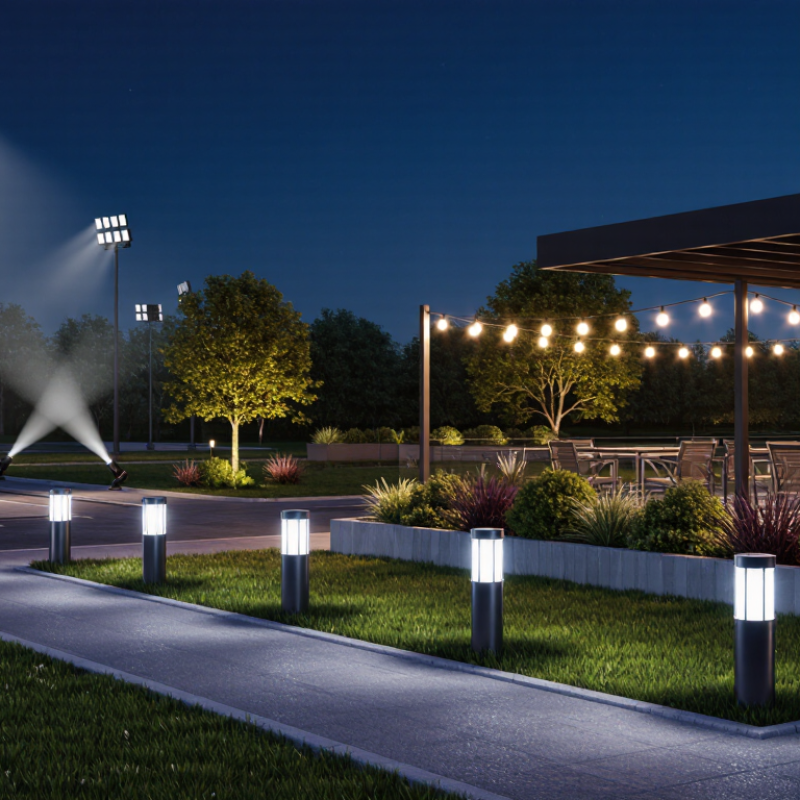
Outdoor lights in 2026 are no longer defined by brightness alone. They must balance visibility, energy use, weather resistance, and human comfort. A well-designed fixture guides movement without turning a garden into a white stage. In recent project reviews, I look for even light on steps, low glare near windows, and stable color after rain. These details matter more than impressive catalog numbers. Buyers should also check the intended environment. A coastal path, hotel entrance, and private balcony need different protection and optics.
Reliable outdoor lighting starts with tested construction. Look for clear ingress protection information, sealed cable entries, corrosion-resistant hardware, and replaceable parts where possible. LEDs should provide useful color quality, not merely high lumen output. Warm tones often suit residential paths, while entrances may need clearer identification. Controls are changing too. Dimming, motion sensing, and scheduling can reduce wasted electricity, but complicated systems may frustrate maintenance teams. Simple controls often survive real operations better.
Sustainability now includes the whole service life. Efficient drivers, recyclable materials, repair access, and long warranties deserve careful attention. Solar fixtures can work well in open locations, yet shade and winter weather may reduce performance. I still question lighting that calls itself smart but cannot be repaired. Global buyers should compare local voltage requirements, installation practices, and disposal rules before ordering. Standards and certifications need verification, not assumption. Outdoor lights in 2026 are defined by dependable performance in ordinary conditions. That is less glamorous, but more honest.
How Outdoor Lights Are Classified by Use and Installation Area
2026 Top Outdoor Lights Types: What Global Buyers Need to Know?
How Outdoor Lights Are Classified by Use and Installation Area
Outdoor lights are best classified by both purpose and installation area. Pathway lights guide movement along gardens, driveways, and hotel walkways. They usually need controlled brightness, stable bases, and shielded beams. Too much light can create glare instead of safety.
Security lights serve entrances, loading zones, and building corners. Floodlights cover wider areas, while motion-activated fixtures reduce unnecessary operation. Wall lights suit doors, balconies, and exterior corridors. Their mounting height affects both visibility and comfort. A low fixture may shine directly into someone’s eyes.
Installation areas create another useful classification. Ground lights sit beside paths or below plants, but poor drainage can shorten their service life. Wall-mounted lights need secure anchors and weather-resistant seals. Ceiling or soffit lights work well under porches and covered entrances. Pole-mounted fixtures suit roads, parking areas, and large landscapes. Wet locations require suitable ingress protection, but buyers should check the actual rating rather than trust vague wording.
Coastal projects need corrosion-resistant materials. Cold regions also demand flexible seals and tested temperature ranges. I have found that a neat product chart can mislead buyers. The same light may perform differently on stone, wood, or metal. The ground changes. Glare matters. Light color, beam angle, wiring access, and maintenance space should be reviewed before ordering. A sample installation often reveals problems that drawings miss.
Which Outdoor Light Types and Technologies Are Leading in 2026?
Outdoor lighting in 2026 is moving beyond simple brightness. High-efficiency LED systems remain the leading choice for streets, gardens, façades, and commercial sites. Their smaller modules support precise beam control, reducing glare on windows and neighboring properties. Warm white light, usually between 2,700K and 3,000K, is preferred for hospitality and residential areas. Cooler light may improve visual clarity, but it can feel harsh at night.
Solar-powered fixtures are gaining attention where trenching is expensive or electrical access is limited. Better batteries and adaptive dimming improve overnight reliability, although cloudy seasons still require careful planning. Smart controls are also expanding. Motion sensors, daylight adjustment, remote monitoring, and scheduled dimming can reduce energy use. However, wireless controls may perform poorly around dense concrete or metal structures. That limitation is easy to overlook.
Tips: Check the full operating environment before choosing equipment. Confirm the IP rating, temperature range, battery capacity, mounting height, and replacement access. For coastal projects, corrosion-resistant materials matter more than impressive specifications. Ask suppliers for photometric data, warranty conditions, and tested service life. A lower purchase price can become expensive after repeated maintenance. Buyers should also compare local electrical standards and recycling requirements. One practical lesson is clear: the brightest fixture is rarely the best fixture. Lighting quality, repairability, and responsible control deserve equal attention.
How to Compare Outdoor Lights for Performance and Durability
Outdoor lights should be compared by performance, not appearance alone.
Start with the required brightness, beam angle, and color temperature for each space. A pathway light needs controlled, low-glare illumination. A security fixture needs stronger output and reliable motion sensing. Check lumens, not wattage, because efficiency differs between designs.
Durability depends on more than an IP rating. IP65 can resist dust and water jets, while coastal projects may also require corrosion-resistant materials. Look for sealed connectors, UV-stable lenses, strong housing, and suitable IK impact protection. Confirm operating temperatures and voltage compatibility before ordering. Thermal management matters too. Poor heat control can shorten LED and driver life. Ask for test reports, photometric data, and clear warranty terms. These documents reveal more than polished product photos.
Tips: Compare the same lumen output across products. Review light distribution, not just brightness. For wet locations, inspect cable seals and drainage details. In salty air, choose protective coatings and corrosion-tested metal. Leave service access for future repairs. A replaceable driver can reduce long-term waste. One compromise remains: the toughest housing may cost more and look less elegant. That is often acceptable outdoors. Still, buyers should question vague claims, because “weatherproof” is not a complete technical specification.
What Global Buyers Should Check Before Purchasing Outdoor Lights
Before purchasing outdoor lights, global buyers should verify performance beyond brightness. The International Energy Agency reports that lighting uses about 15% of global electricity. Efficient equipment matters, but real savings depend on optics, controls, and operating hours. Ask for tested lumens, efficacy, beam distribution, and lumen maintenance data. A laboratory claim above 200 lumens per watt may describe a component, not a complete outdoor fixture, as noted in the U.S. Department of Energy’s solid-state lighting research reports.
Check the installation environment carefully. IEC 60529 IP ratings indicate protection against dust and water, while impact resistance requires separate verification. Coastal sites need corrosion-resistant materials and suitable testing evidence. Confirm operating temperature, surge protection, cable glands, and driver replacement access. A warm white 2700–3000K setting can reduce glare and improve comfort near homes. CIE 150 guidance also encourages buyers to control upward light and unwanted spill.
Do not treat certificates as decoration. Request photometric files, safety reports, electromagnetic compatibility results, and local conformity documents. Review warranty terms in writing, including battery, driver, coating, and replacement responsibilities. Ask whether performance data reflects the exact model and voltage. This is often overlooked. A sample may look excellent for one week, yet poor thermal design can reduce output later. The checklist is useful, but not perfect; dust, salt, voltage changes, and installation errors still affect field results. Test a small area before placing a large international order.
| Outdoor Light Type | Typical Applications | Typical Light Output | Typical Color Temperature | Recommended Ingress Protection | Typical Service Life | Main Energy Options | Key Purchasing Checks |
|---|---|---|---|---|---|---|---|
| LED Floodlight | Security lighting, building façades, loading areas, sports and large outdoor spaces | 1,000–20,000 lumens | 3,000–6,500 K | IP65 minimum IP66 for exposed or heavy-rain locations |
25,000–50,000 operating hours | Wired AC; solar versions are also available | Check beam angle, glare control, mounting bracket strength, surge protection, motion-sensor compatibility, operating temperature and actual delivered lumens. |
| Wall Lantern and Wall Sconce | Residential entrances, hotels, restaurants, corridors and exterior architectural lighting | 300–2,000 lumens | 2,700–4,000 K | IP44 minimum IP54 or higher for fully exposed walls |
20,000–50,000 operating hours for LED models | Wired AC; integrated LED or replaceable lamp | Verify wall-box compatibility, cable entry, drainage, glass or diffuser durability, corrosion resistance and whether the lamp is replaceable. |
| Bollard Light | Walkways, gardens, driveways, parks, resorts and landscape boundaries | 300–1,500 lumens | 2,700–4,000 K | IP54 minimum IP65 is preferable for irrigation or coastal exposure |
25,000–50,000 operating hours for LED models | Wired AC, low-voltage DC or solar | Check impact resistance, foundation and anchor details, light distribution, concealed cable routing, water drainage and protection against lawn equipment. |
| Pathway and Garden Spike Light | Flower beds, pedestrian paths, driveways and decorative landscape lighting | 100–800 lumens | 2,700–3,500 K | IP54 minimum IP65 for sprinklers and frequent wetting |
20,000–40,000 operating hours for LED models | Low-voltage DC, wired AC or solar | Check spike material, cable length, connector sealing, glare shielding, spacing recommendations and whether the driver is suitable for the local voltage. |
| In-Ground and Underwater Light | Driveways, plazas, decks, fountains, pools and façade uplighting | 300–3,000 lumens | 2,700–4,000 K; RGB or tunable white options are available | IP67 for temporary immersion IP68 for continuous immersion, when certified |
25,000–50,000 operating hours for LED models | Low-voltage DC or sealed mains-powered systems | Check load-bearing rating, drainage, anti-slip surface, thermal management, cable glands, corrosion resistance and whether the IP rating applies to the complete assembled product. |
| Solar Outdoor Light | Gardens, paths, remote areas, fences, signs and locations without convenient grid power | 100–2,000 lumens, depending on panel and battery size | 2,700–6,500 K | IP44 minimum IP65 or higher for exposed installations |
LED module: 20,000–50,000 hours Battery: commonly 2–5 years, depending on chemistry and climate |
Solar photovoltaic panel with rechargeable battery | Check battery chemistry, rated capacity, winter performance, autonomy in hours, charging time, solar-panel wattage, replacement-battery availability and local sunlight conditions. |
| Post-Top and Street Light | Public areas, private roads, campuses, parking areas, parks and entrance drives | 2,000–15,000 lumens | 2,700–4,000 K; some roadway projects use up to 5,000 K | IP65 minimum IP66 is preferred for critical infrastructure |
50,000–100,000 operating hours for quality LED systems | Wired AC; solar or hybrid systems are available | Check pole diameter, wind-load data, photometric files, dimming protocol, surge protection, maintenance access, light trespass and local roadway regulations. |
| Deck and Step Light | Stairs, terraces, balconies, decks, retaining walls and outdoor seating areas | 50–500 lumens | 2,700–3,500 K | IP65 minimum IP67 for ground-level or frequently wet installations |
20,000–50,000 operating hours for LED models | Low-voltage DC or wired AC | Check recessed cut-out dimensions, surface temperature, cable connectors, glare control, driver capacity and compliance with local electrical installation rules. |
| Outdoor String and Festoon Light | Patios, cafés, events, hospitality venues, gardens and temporary installations | 20–100 lumens per lamp | 2,200–3,000 K for decorative warm light | IP44 minimum IP65 is preferable for permanent exposed use |
10,000–25,000 operating hours for LED lamps | Wired AC, low-voltage DC or solar | Check cable gauge, maximum connectable strings, socket spacing, strain relief, bulb replacement, suspension wire support and outdoor-rated plug protection. |
| Motion-Sensor Security Light | Garages, entrances, side passages, warehouses and residential security zones | 800–5,000 lumens | 3,000–6,500 K | IP54 minimum IP65 for fully exposed locations |
20,000–50,000 operating hours for LED models | Wired AC or solar with rechargeable battery | Check sensor detection range, detection angle, adjustable time delay, ambient-light threshold, false-trigger resistance and compatibility with local mains voltage. |
Related Posts
-
Navigating Tariff Challenges: How China’s Outdoor Light Fixtures Thrive Amidst Global Trade Tensions
-
7 Innovative Outdoor Lights to Transform Your Space
-
Why Choose Outdoor Light Fixtures for Your Home Enhancement?
-
China Top Outdoor Light Fixtures Suppliers?
-
Issues with Best Outdoor Lights That Every Global Buyer Should Know
-
Mastering Outdoor Light Fixtures in Your Landscape Design with Expert Tips and Tricks